The first time I used Lemlist was back in 2020.
Back then, it was a cold email tool, and a pretty damn good one. Personalized images, smart variables, and enough flexibility to make cold outreach feel less robotic and more like you actually wrote the email for that person.
Fast-forward six years. I started hearing about Lemlist's new features, so I logged back in to see how the product had evolved.
It has grown into something much bigger. It now covers far more of the outbound workflow, but it also comes with a noticeably higher price tag.
So, is it worth it?
That's what I wanted to figure out with this review.
I spent weeks inside the platform, ran through the full trial, tested the core workflows, checked what you actually get at each pricing tier, and even came back after the trial ended to see what happens when you lose full access.
So let's look at Lemlist the way I'd evaluate any outbound tool before putting it into a real sales stack: what works, what's frustrating, what you're actually paying for, and whether I'd spend my own money on it in 2026.
If you are just here for the verdict, here is the shortlist before we go deeper.
Lemlist is an AI-powered sales engagement platform that runs multichannel outreach across email, LinkedIn, calls, WhatsApp, and SMS from a single dashboard.
It also handles lead sourcing through a built-in 650M+ contact database, deliverability through its own warm-up engine called lemwarm, and reply management through a unified inbox.
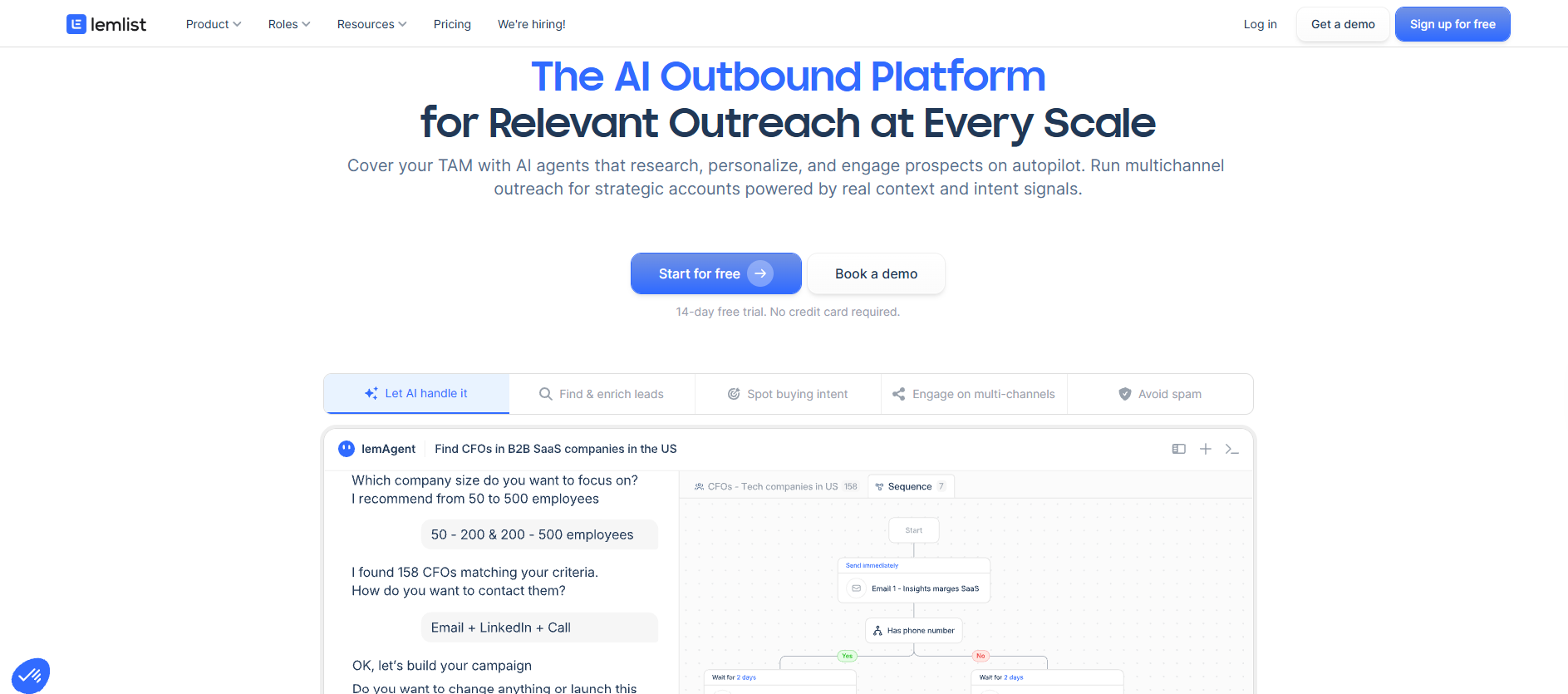
Here is why that shift matters for you as a buyer. If you are comparing Lemlist to a $37 per month cold email tool and wondering why it costs three times as much, the answer is that Lemlist is not trying to be a cold email tool anymore.
It is trying to be your entire outbound stack. Whether that is what you actually need is the question we will unpack throughout this review.
Pricing is where I want to spend a bit more time than most reviews do, because Lemlist's own pricing page can be misleading if you are skimming it quickly.
Here is the honest breakdown of what you get at each tier.
On top of the base plan fee, Lemlist runs a pay-per-success credits model. One credit equals one cent, and different actions burn different amounts of credits.
That last one deserves a second look. At 400 credits per LinkedIn engagement signal, you are looking at $4 per signal.
If your outbound motion leans heavily on LinkedIn intent tracking, that line item can quietly become one of your biggest software costs by month three.
Here is something that took me a while to find, but I think you deserve to know upfront. Lemlist's Terms of Service state that the minimum annual fee is non-cancelable and non-refundable for any reason whatsoever. Contracts are generally set to 12 months. There are no prorated refunds if you cancel early, and unused credits expire without refund.
If you are the kind of buyer who likes to test tools quarterly and switch when something better comes along, that lock-in should absolutely factor into your decision.
This is where most reviews go generic.
They paraphrase the feature list from the marketing site and move on.
I would rather show you what the product actually does when you are inside it, because there is a real gap in a few places between what is promised and what ships.
The first thing I did after signing up was open a campaign and click "+ Add step" to see what channels were actually available. On the Email plan, the answer is exactly what you would expect and also a little disappointing. Only Email was unlocked.
Every LinkedIn action, including Chat message, Visit profile, InMail, Invitation, Withdraw invitation, Follow user, Like or comment on last post, and Endorse skill, sat behind a small lock icon with an "Unlock" badge. Same story for Voice message, WhatsApp chat, and something called AI Voice message, which is a distinct AI-generated voice note step I had not seen mentioned anywhere on Lemlist's marketing pages. It is a nice touch, but you only get it if you upgrade.
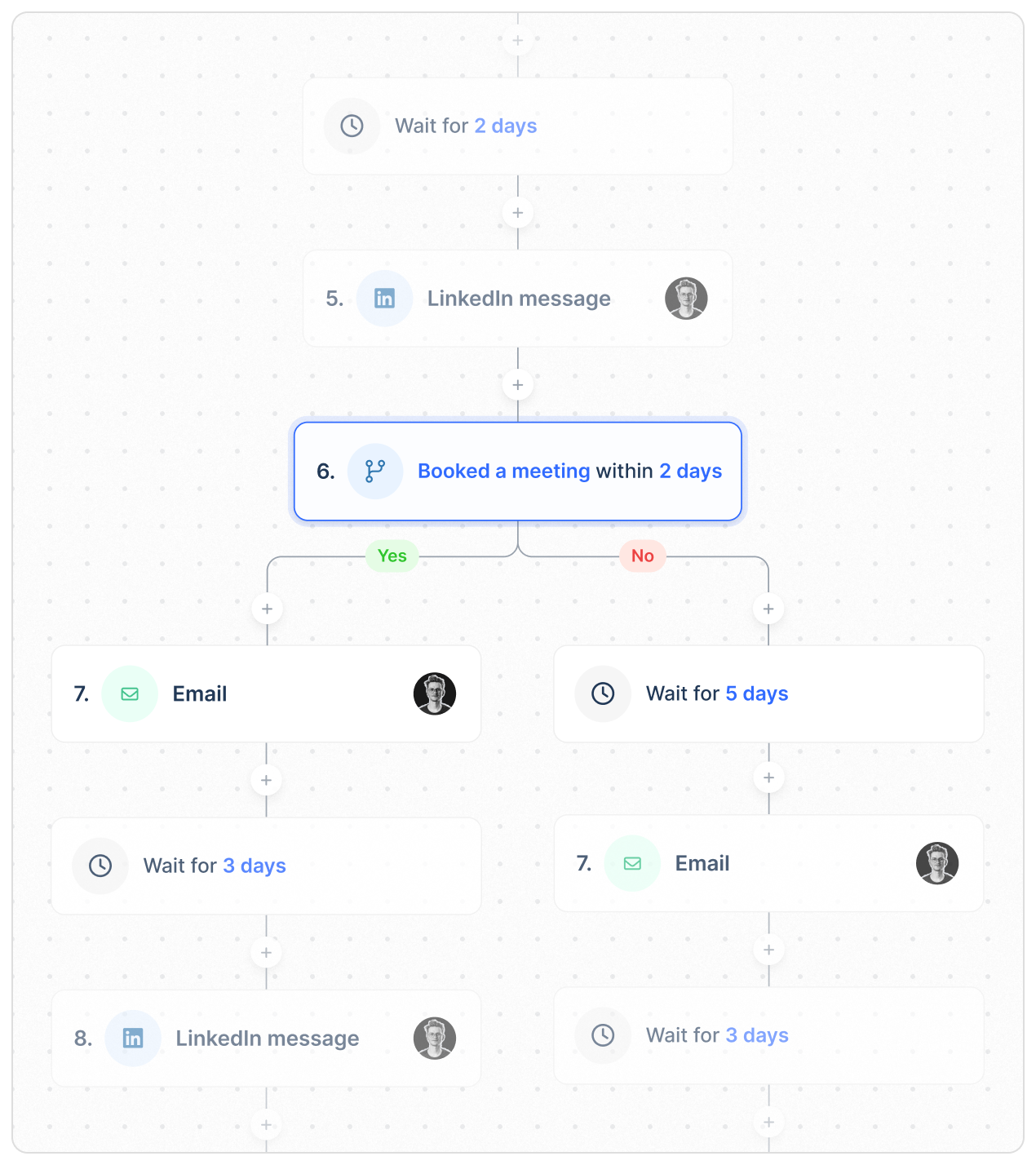
The takeaway here is straightforward. If you want anything beyond email, you are paying $109 per user per month, and there is no in-between tier that gets you, say, email plus LinkedIn without the full multichannel stack.
lemAgent is Lemlist's AI campaign generator. In theory, you prompt it with something like "Build a multichannel outreach sequence from scratch," and it drafts the whole thing for you.
In practice, when I tried this after my trial expired, I got back a message that said, "Upgrade to a paid plan to use lemAgent. You are currently in read-only demo mode."
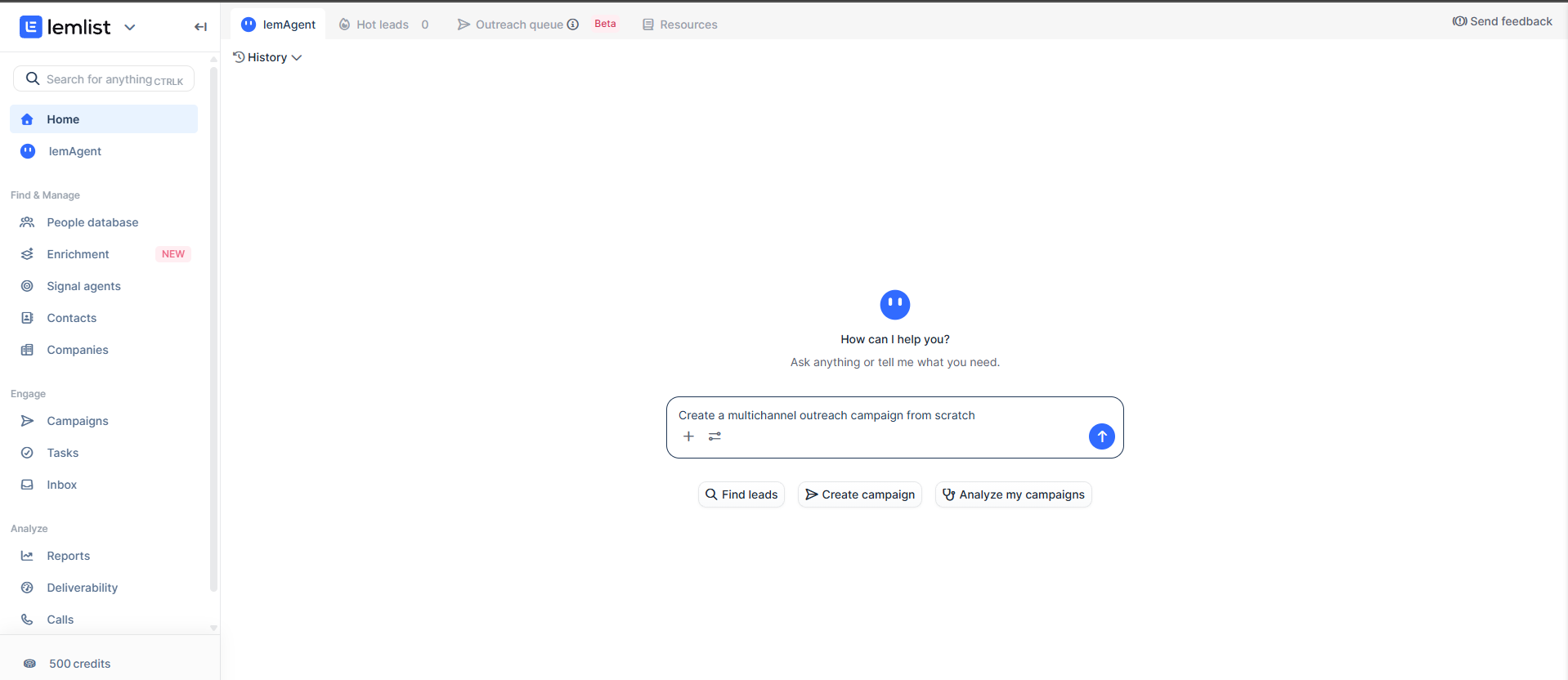
Fair enough on the gating, but it points to a bigger problem with how Lemlist handles the post-trial experience.
This one genuinely surprised me, and I think it is worth flagging clearly because it is the biggest gap between Lemlist's marketing and its shipped product.
Signal Agents is Lemlist's AI-powered intent signal system. The pitch, both on the marketing site and inside the app, is "One system. Three agents. Zero manual work," and the three agents are named Scout, Engage, and Optimize.
Together, they are supposed to find buying signals, contact prospects with personalized outreach, and optimize your setup every week.
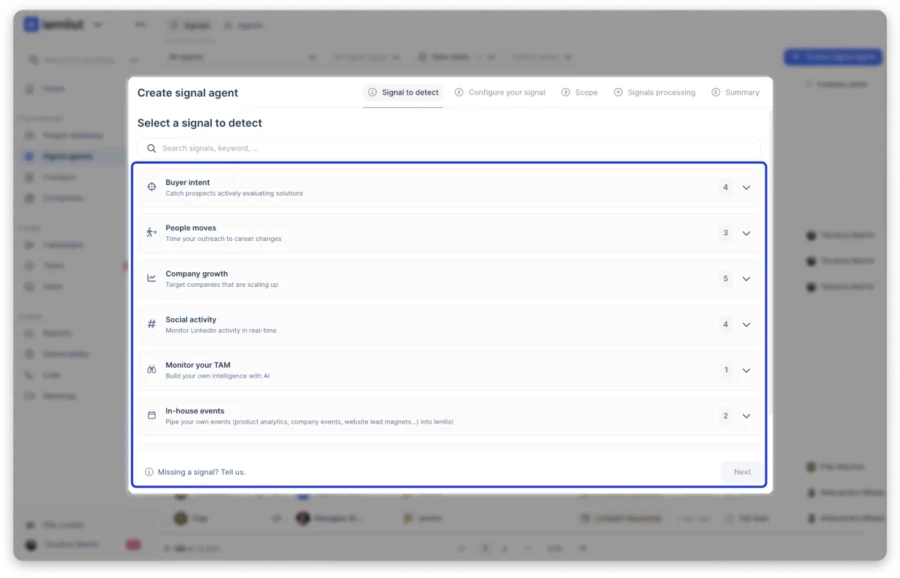
Here is the catch. Inside the app, only Scout is actually live.
Both Engage and Optimize are labeled "Coming soon" directly in the product UI. So the three-agent promise is really a one-agent product with two placeholders, at least as of my testing.
Now for the part where Lemlist genuinely delivers, and I want to give credit where it is due.
The Deliverability section inside Lemlist has five tabs. Warm-up, Outreach, Inbox placements, Alerts, and Settings. There is a clear disclaimer at the top that all metrics are sourced directly from Lemwarm.
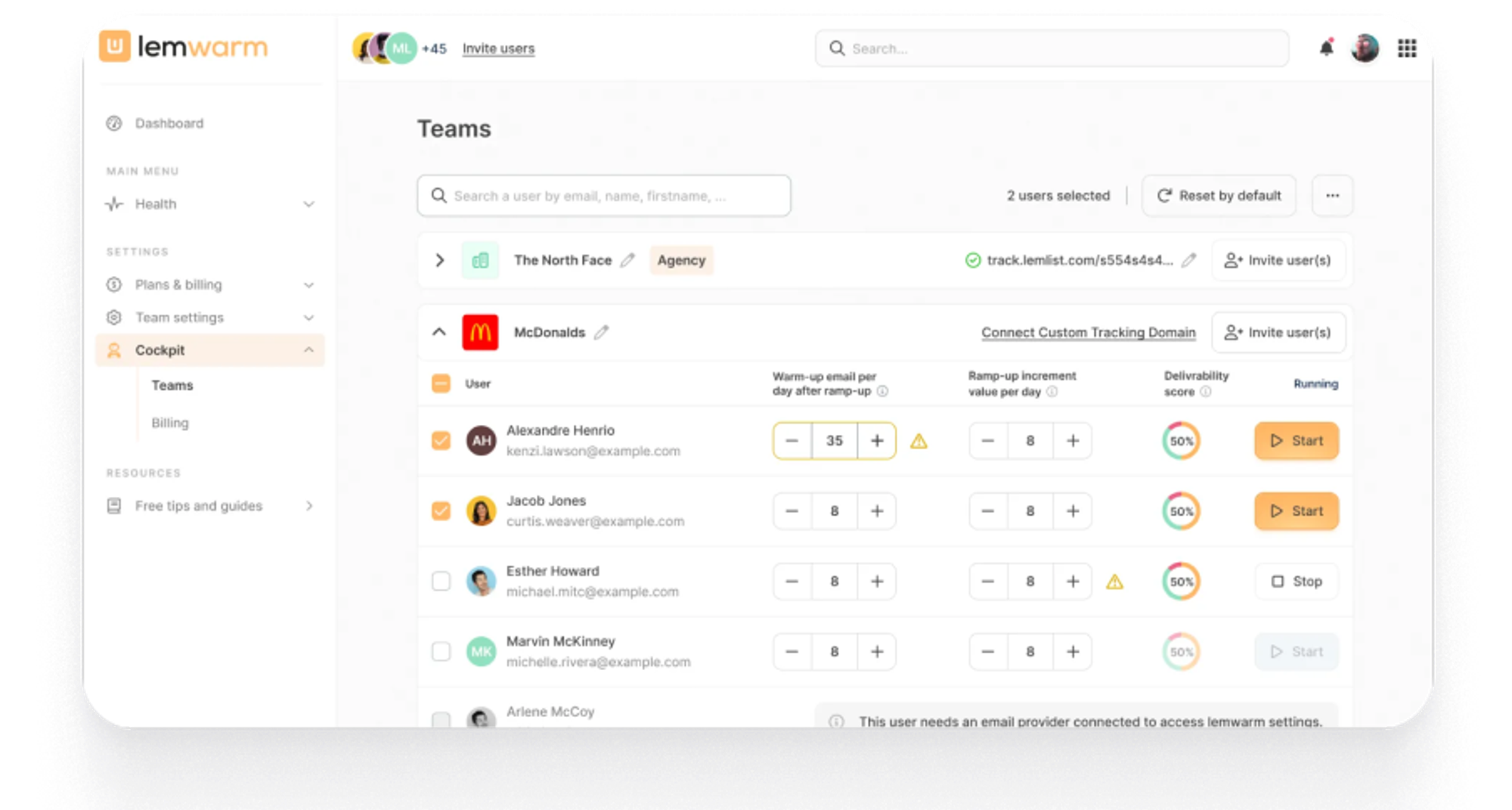
The Inbox placements tab breaks down your scores by Global, Google, Microsoft, and SMTP-IMAP, and there is a "Run inbox placement test" button that the Help Center recommends you use once or twice a month.
The Settings tab includes options for "Buy domain and mailboxes," "Team settings," and a "Run tech setup audit" button. These are not just marketing claims. They are real, working features inside the product.
If deliverability is the part of cold email you obsess over, and if you are serious about outbound, it should be; this is one of the more thoughtful in-app dashboards I have used. To go deeper on why placement testing matters, you need to understand that cold email deliverability is a good place to start.
And if the SPF, DKIM, and DMARC checks Lemwarm surfaces feel unfamiliar, this authentication breakdown will save you a lot of Googling.
Going in, I had assumed reporting would be thin, because the marketing site barely mentions analytics as a differentiator. I was wrong about that.
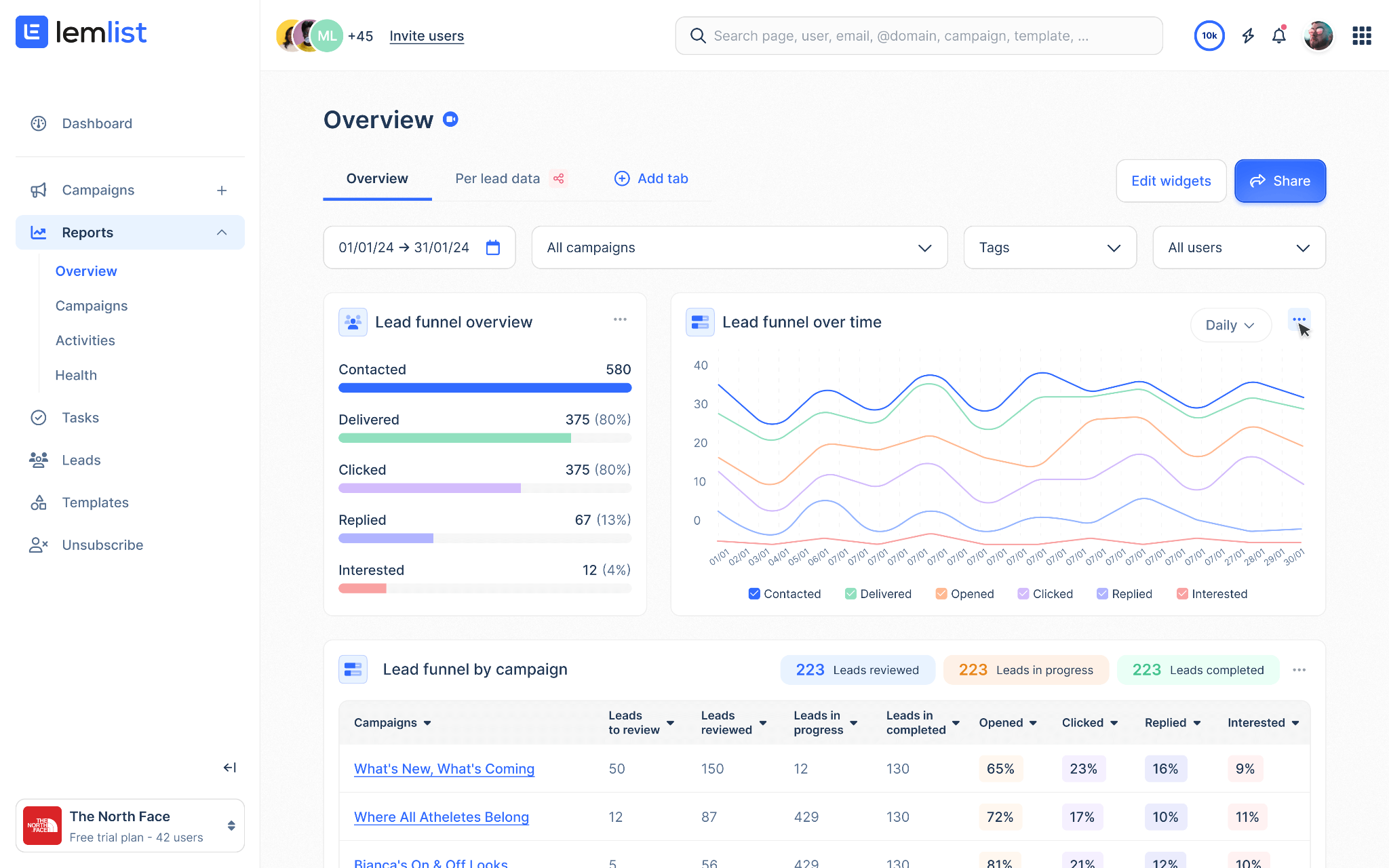
The Reports tab inside Lemlist is actually a fully customizable BI-style dashboard. You can edit widgets, share dashboards with your team, work across multiple tabs, and filter by tags, campaigns, or users.
There are proper lead-funnel charts too, not just static exports. If you have used tools where "reporting" means downloading a CSV, this is a real upgrade.
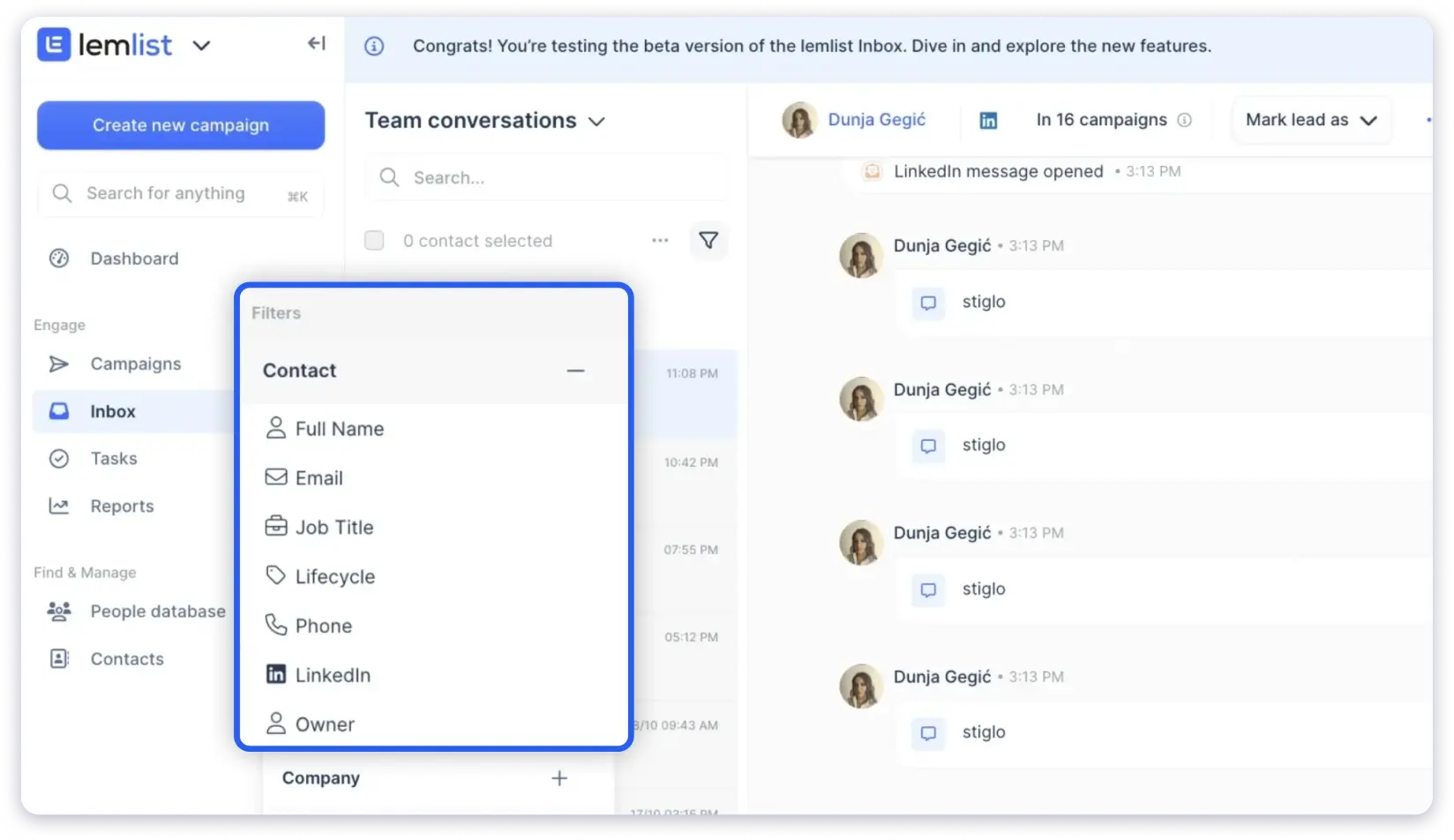
Reply to leads via email, LinkedIn message, WhatsApp, or SMS from a single thread.
This is a real, working feature, and one of the genuinely useful things about consolidating your outreach into one platform. Even in my post-trial locked state, the inbox loaded and functioned normally. It was just empty because I had no active campaigns.
Recommended Read: Dedicated vs shared IPs
One of the bigger changes in Lemlist over the last two years is that lead sourcing now lives inside the same platform as the outreach. You no longer need a separate Apollo, ZoomInfo, or Lusha subscription just to fill your pipeline with contacts.
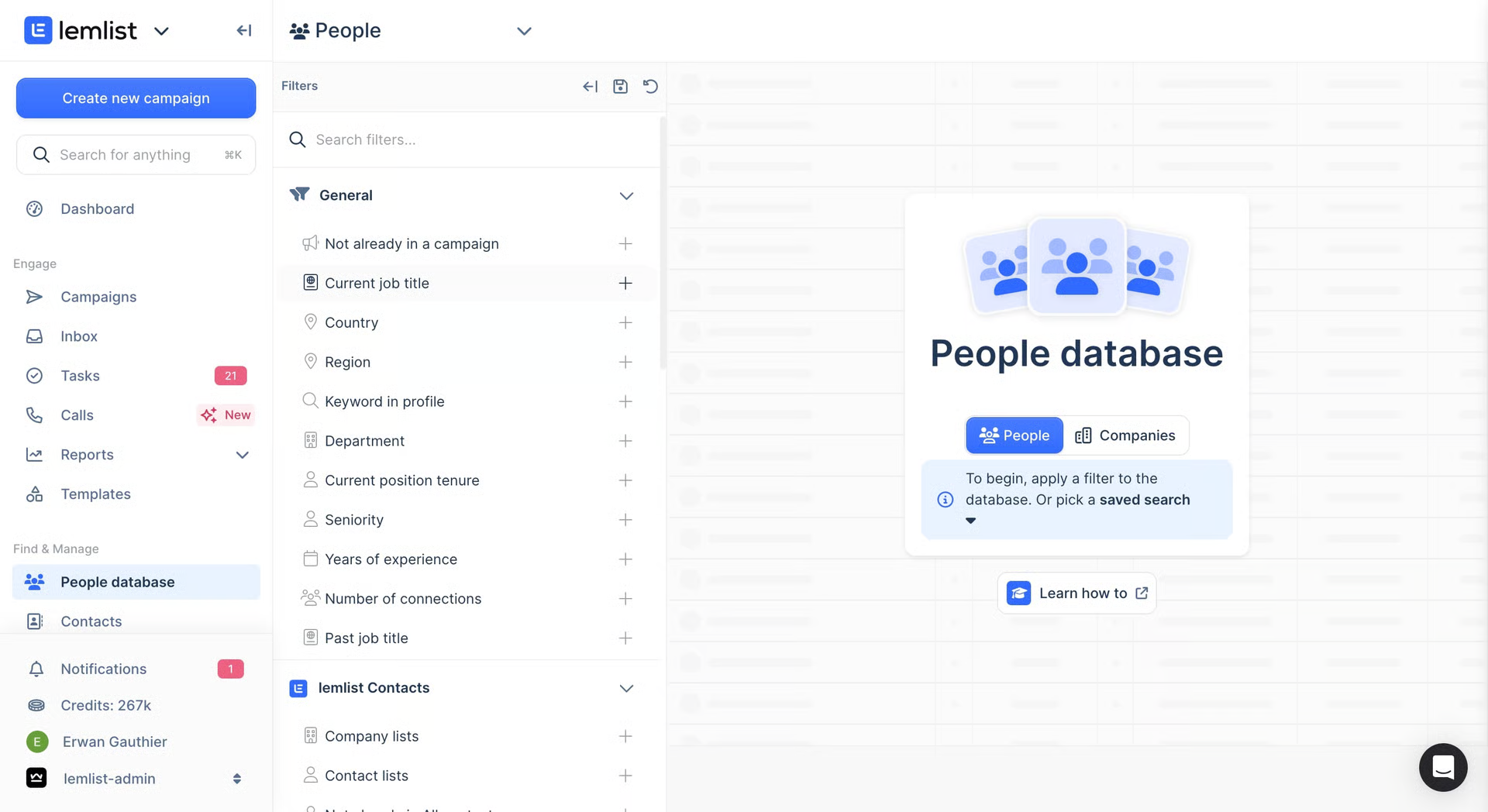
Lemlist's built-in database currently covers 650 million+ B2B contacts, and you can search it directly from the app under the "Leads" section.
The filters are what you would expect from a modern lead search tool. Job title, seniority, company size, industry, geography, technologies used, and department.
You can also enrich existing contact lists by uploading a CSV and letting Lemlist fill in missing emails, phone numbers, or LinkedIn URLs.
Here is how the pricing model works for the database, and this is where it gets important. Lemlist charges you in credits per successful enrichment, not per search.
In practice, enriching 1,000 leads with both email and phone data would run you about $250 in credits on top of your base subscription.
That is not outrageous for a built-in database, but it is worth doing the math against standalone tools. Apollo, for example, includes bulk credits in its base subscription.
Lemlist's model is closer to pay-as-you-go, which works in your favor if you are enriching in small batches and against you if you are pulling large lists monthly.
Lemlist currently holds a 4.6 out of 5-star rating on G2 from 1,316+ reviews as of late 2026.
That is a strong number, and the reviews line up pretty well with what I experienced in my own testing.
Here are three real reviews that capture the current sentiment, both the good and the bad.
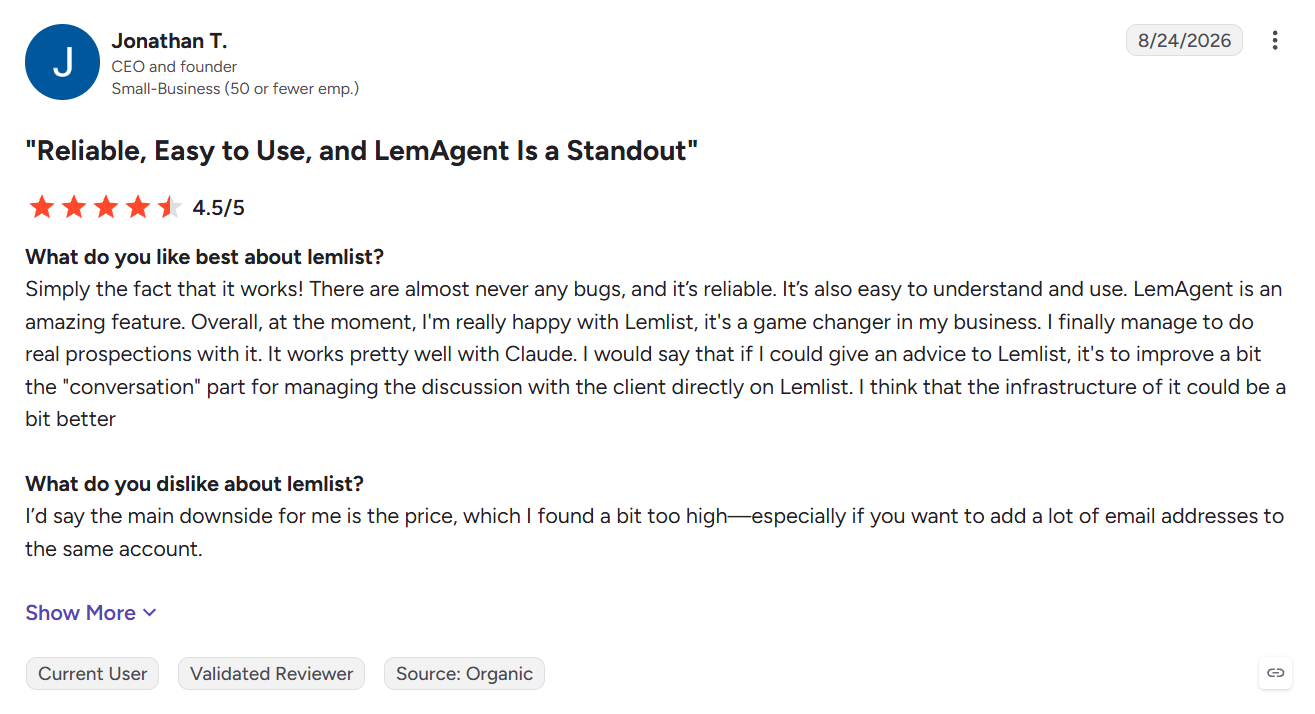
Source: G2
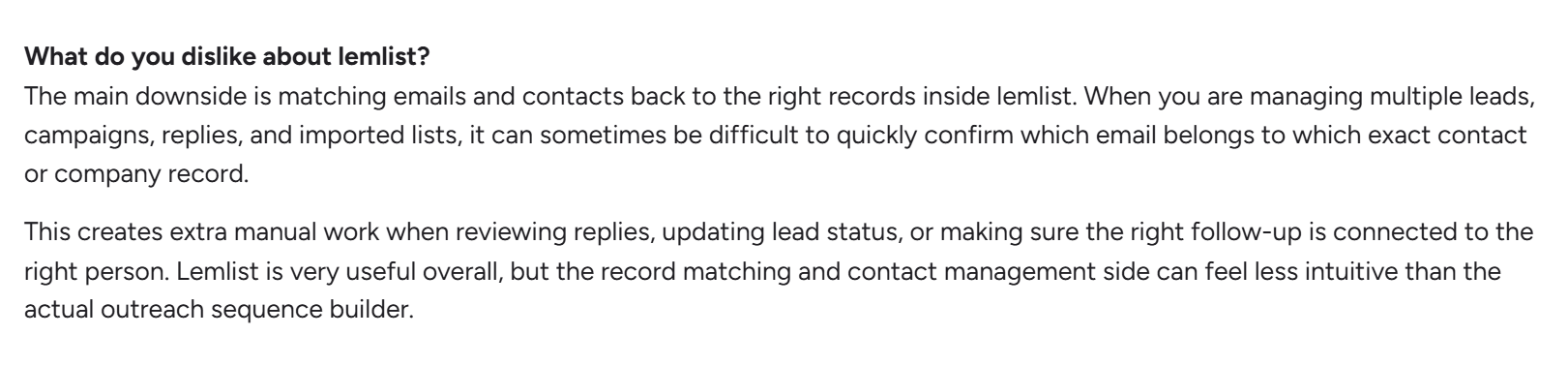
Source: G2
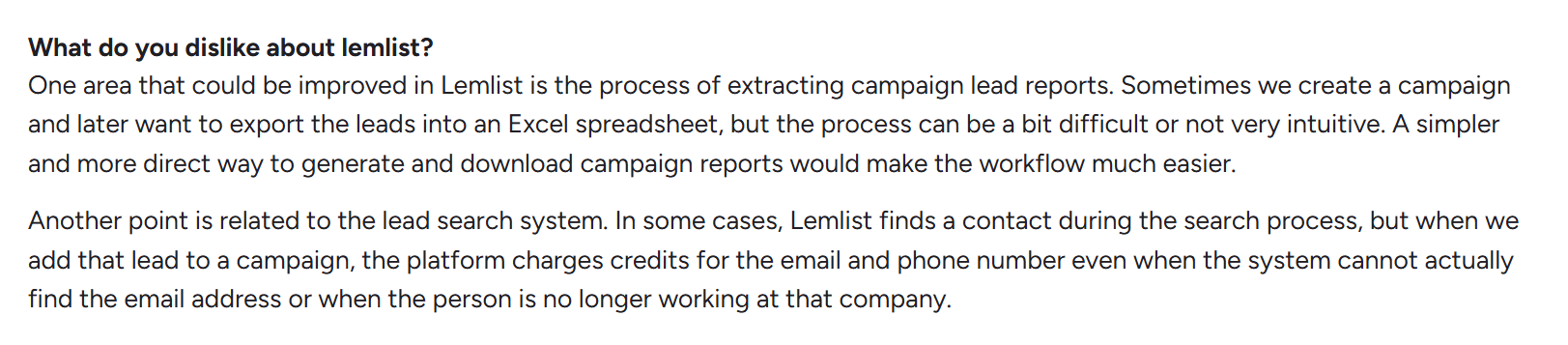
Source: G2
The pattern across reviews is pretty consistent. Small teams and solo operators love the personalization and the deliverability tools.
Growing teams start hitting friction around per-seat pricing and interface complexity as they scale.
Read the 3-star reviews first if you want the honest picture. They usually surface the friction that the 5-star crowd has not hit yet.
To be fair, there is real substance behind Lemlist's reputation. Here is what I think it does better than most competitors in 2026.
Now for the honest list of frustrations.
At this point, you have a pretty complete picture. The question is really about fit, not features. Here is the honest decision framework I would use.
Read this cold email infrastructure guide.
If a couple of the frustrations above hit close to home, especially the per-seat pricing and the partial AI shipping, Salesforge is worth putting on your shortlist.
Here is how the two stack up on the dimensions that actually matter.
Two things keep drawing me back to Salesforge when I compare the two head-to-head.
You can run him in Auto-Pilot mode where he works fully autonomously, or Co-Pilot mode where you approve replies before they go out.
If you are evaluating outbound platforms for a team of three or more and want the pricing to stay predictable as you scale, that is the comparison I would run first.
Here is my honest answer. Lemlist is a genuinely capable platform, and if you are a well-funded sales team that wants a polished outbound tool with strong deliverability features and a well-known brand behind it, it is a legitimate choice.
The lemwarm integration is one of the best in the category, the reporting is better than the marketing lets on, and the multichannel breadth is real when you actually pay for it.
That said, if you are cost-conscious, running high volume, or wary of long contracts, the math gets harder to justify. Per-seat pricing compounds quickly. The 12-month lock-in is not for everyone. And the AI story, while genuinely exciting on paper, is currently more marketing than shipped product.
My take, after weeks of testing?
Lemlist has priced and positioned itself into a very specific segment. Mid-market sales teams with budget for a per-seat platform and the appetite for a year-long commitment. If that describes you, it is a solid pick. If it does not, tools like Salesforge exist for a reason, and they are worth serious evaluation before you sign anything.
Yes, Lemlist is genuinely capable for cold email. It supports full email sequences, warm-up through lemwarm, inbox placement testing, and unified reply handling all in one place. That said, cost-conscious high-volume senders may find per-seat pricing limiting once they scale beyond a few users.
Lemlist's Email plan starts at $69 per month monthly, or $55 per month billed annually, for unlimited users and 50,000 emails per month. The Multichannel plan is $109 per user per month, or $87 per user per month billed annually, which unlocks LinkedIn, WhatsApp, SMS, and calls. Enterprise pricing is custom. Always verify current pricing on lemlist.com before committing.
Yes, Lemlist offers a 14-day free trial with full access to the Multichannel plan and no credit card required. Just be aware that after the trial ends, if you do not upgrade, your account enters a read-only demo mode where most core features are locked.
No, and this is an important detail. Lemlist's Terms of Service state that annual contracts are non-cancelable and non-refundable, and contracts are generally 12 months in length. Always verify the current terms directly on lemlist.com before signing.
That depends on what is not working for you. If you want unlimited senders without per-seat pricing and a fully shipped AI SDR, Salesforge is the closest match. If your issue is specifically infrastructure control, that is a separate decision worth researching independently.
Lemlist has a built-in deliverability hub powered by lemwarm. It includes warmup, outreach monitoring, inbox placement testing across Global, Google, Microsoft, and SMTP-IMAP, alerts, and a tech setup audit tool. It is one of the more detailed in-app deliverability dashboards you will find in this category.
lemAgent is Lemlist's AI campaign generation tool. You prompt it with what you want, like "Build a multichannel outreach sequence for SaaS founders," and it drafts the campaign for you. It is available on paid plans only, and trial-expired accounts get locked out of using it.