
Personalized Outbound Strategy
Get The Right Outbound Strategy In Minutes
Enter your email to get a custom plan & stack recommendation for your business
It's being carefully crafted by AI
Please check your mailbox in 5 minutes

InboxKit gives you real Google Workspace and Microsoft 365 mailboxes on your own domains. They handle the DNS for you, support 24+ sequencer integrations, and let you send your first email in under an hour. If you’re just getting started, that might be enough.
But once you start scaling, the cracks show.
Your mailboxes still send from Google and Microsoft IPs, which means your sender reputation is tied to everyone else using that infrastructure. And you don’t really get visibility into what they’re doing.
Warmup costs an extra $3 per mailbox. If a mailbox gets burned, there’s no clear replacement policy. There’s also no SMTP option and no pre-aged domains.
That’s not a dig at InboxKit. It just means their product has a ceiling.
So I looked at five other providers that handle these trade-offs differently. I compared whose IPs you’re actually sending from, what’s included in the mailbox price, and what happens when you burn through a mailbox.
Every tool here solves at least one of InboxKit’s limits. But not every tool solves the problem you actually care about. Here’s how I ranked them: by what tends to break first once teams start sending at scale.
InboxKit mailboxes send through Google and Microsoft IPs that are shared with everyone else on that infrastructure. When placement drops, you can’t see who else is using your address. Three tools handle that differently:
InboxKit charges $3 per mailbox for warm-up, and InfraGuard becomes paid after the first month. At 50 mailboxes, that’s $150 in add-ons before monitoring.
Clayinbox includes warm-up, monitoring, replacements, and API access in the price. ScaledMail and Maildoso include neither and are clear about it.
Mailboxes burn out. At scale, that’s part of the operating cost, not a rare exception. Infraforge bills you for slots, not individual accounts.
Clayinbox gives you unlimited replacements. Icemail covers the cost for you. InboxKit doesn’t mention replacements.
InboxKit gives you fresh domains, so you’re usually looking at about two weeks of warm-up before sending real volume. ScaledMail sells pre-aged domains at 30, 90, and 180 days, and Infraforge offers pre-warmed domains and mailboxes.
If you need to onboard a client next week, this matters. If your setup is already live, it matters much less.
Filters change every quarter, and if you only have one ESP, you have nowhere to pivot when things shift.
Email automation is useful for setup, but it won’t help much when you need to troubleshoot. ScaledMail puts real people on your account through a dedicated InboxKit that sticks to email and chat.
Scale cold outreach with Infraforge’s private email infrastructure, dedicated IPs, automated DNS setup, and mailboxes from $3 per month.
Best for: Teams that want dedicated IPs and dedicated servers, rather than mailboxes on shared infrastructure with thousands of other senders.
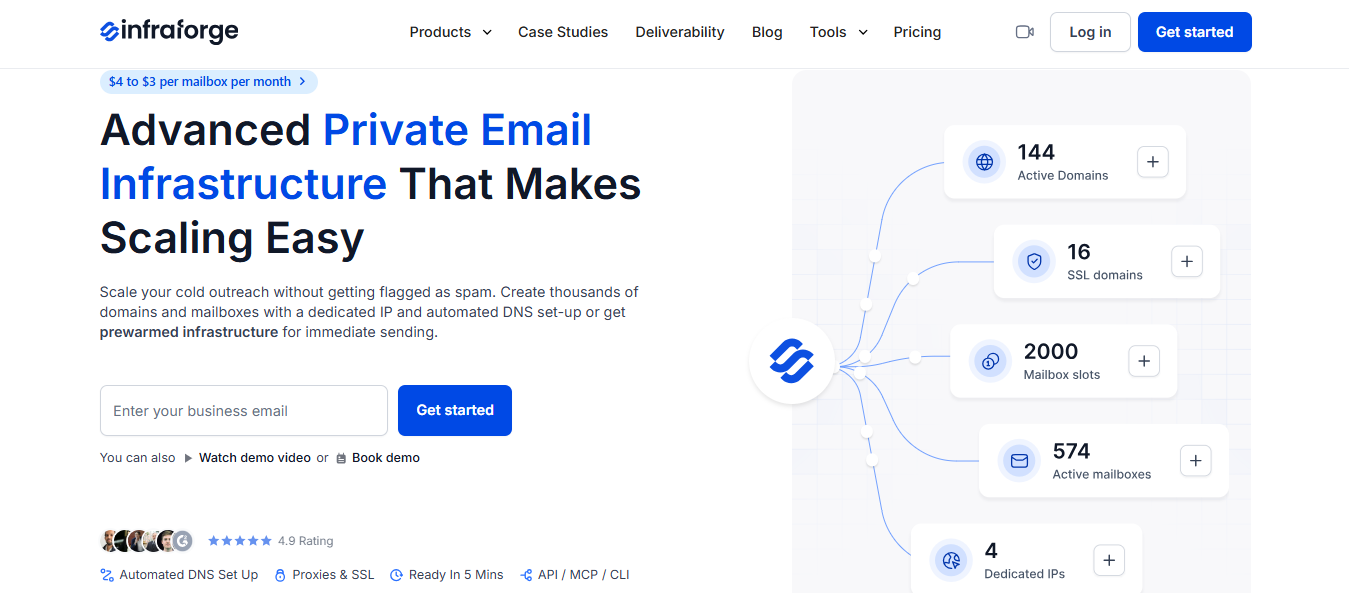
Infraforge is my top InboxKit alternative, and the biggest difference is the IP your email actually sends from.
InboxKit gives you official Google Workspace, Microsoft 365, and Azure accounts. They are real mailboxes, but they still send from Google and Microsoft IPs shared with every other sender on that infrastructure.
When placement drops, you cannot see who else is sending from your address, what they are doing, or how much damage they might be causing.
Infraforge runs dedicated servers with a dedicated IP per setup. If your emails land in spam, it is your sending causing it, and your work that fixes it.
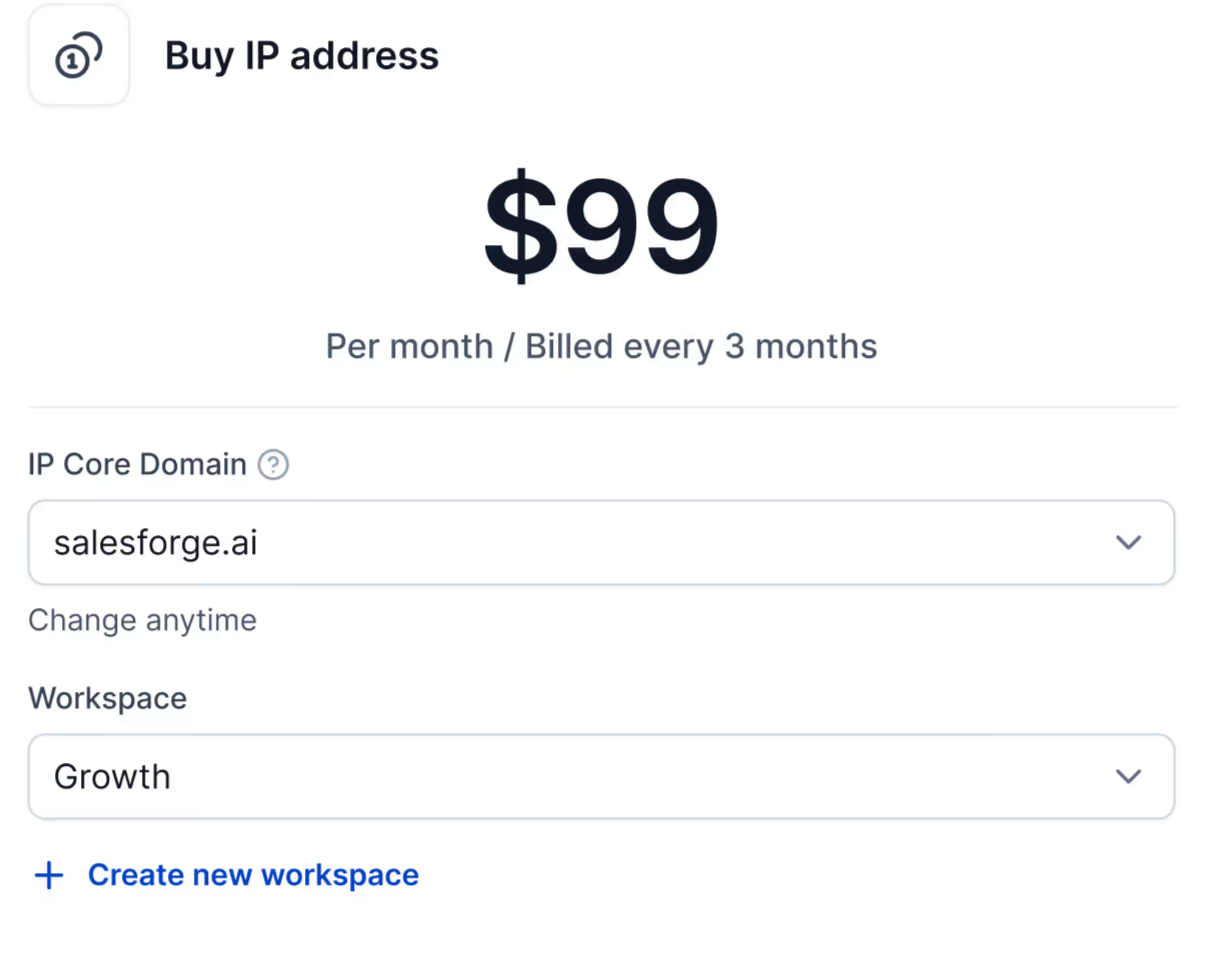
The second big difference is what happens when a mailbox burns. Most providers charge per mailbox, so each replacement adds to the cost.
Infraforge bills by slots, which means you are paying for capacity rather than individual accounts. Delete a burned mailbox, create a new one, and pay nothing extra.
Three other things matter once you are sending volume. Domains and mailboxes are unlimited. Sender rotation and sending limits are built in, so you do not have to track per-mailbox volume manually.
Separate workspaces also make it easier to move domains and mailboxes between clients without having to untangle everything from one account.
On shared infrastructure, you cannot see who else is sending from your IP address, so a placement drop leaves no clear trail to follow.
A dedicated IP gives you that trail, and Infraforge keeps DNS in your hands so you can act on what you find.
A first domain and mailbox take about 5 minutes to set up, with DMARC, SPF, DKIM, and custom tracking configured automatically for every domain you add.
Infraforge connects directly to Salesforge and exports to Smartlead, Instantly, ReachInbox, and FirstQuadrant. There is no free trial, although you can explore the app before buying anything.
InboxKit if you need official Google or Microsoft accounts and the 24+ integration catalog. Infraforge, if you send enough volume that a shared IP becomes a risk, you cannot afford it.
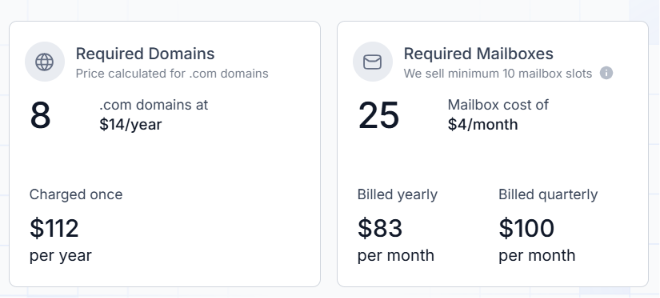
Infraforge runs from $4 down to $3 per mailbox by volume, with a minimum of 10 slots. DNS setup, hosting, API access, and support are included.
InboxKit prices by billing cycle: $3.00 per mailbox per month, $2.70 per mailbox per quarter, and $2.50 per mailbox per year, plus $30 per Azure tenant. Warmup adds another $3 per mailbox, bringing 50 InboxKit mailboxes to $300 per month.
At 200 mailboxes, Infraforge comes to $651 vs. $1,680 for Google Workspace direct.
Best for: Agencies and teams that want warm-up, monitoring, and replacements included in the mailbox price rather than charged as separate add-ons.
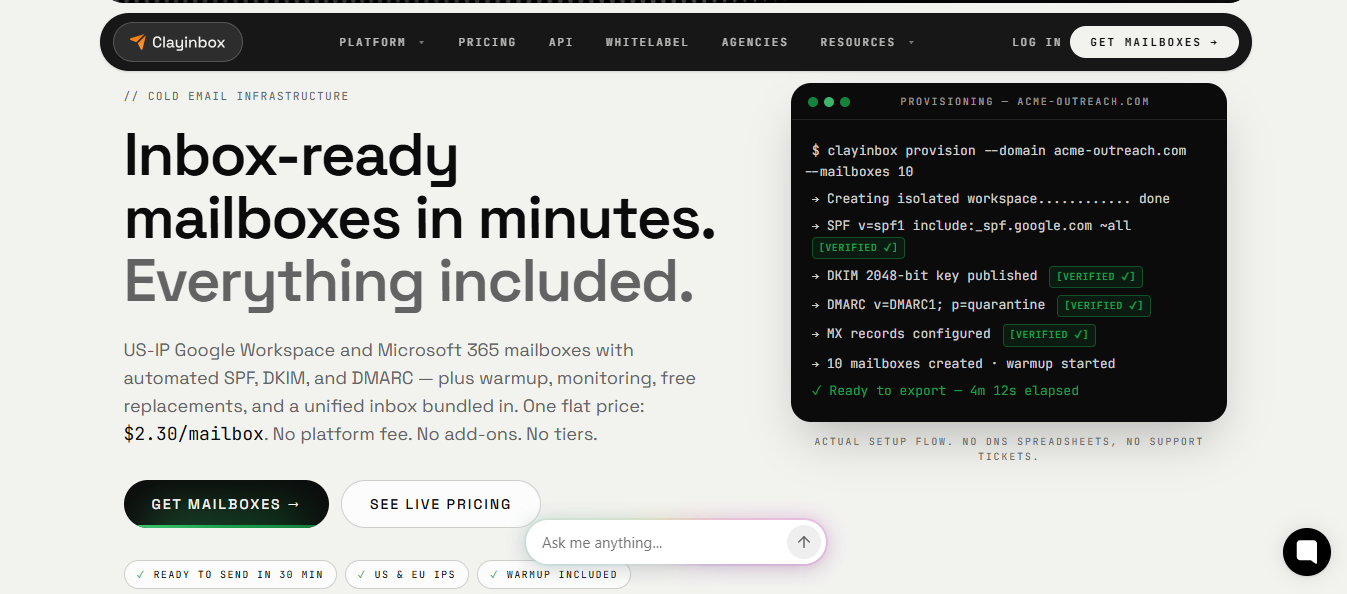
Both Clayinbox and InboxKit sell Google Workspace and Microsoft 365 mailboxes on your own domains. Both also run Azure high-density tenants and provide full API access.
The difference is what the per-mailbox price actually includes. With InboxKit, Warmup costs another $3 per mailbox per month, and InfraGuard is free for the first month before it becomes paid. Run 50 mailboxes, and Warmup alone doubles your bill.
Clayinbox puts Warmup, monitoring, unlimited replacements, and API access inside the mailbox price across all four plans, so the number you quote a client is the number you actually pay.
InboxKit’s $2.50 rate means paying twelve months upfront. Clayinbox charges one price per mailbox type with no commitment cycle, which matters when client work ends. A year of mailboxes bought for a client who churns in month four is money you do not get back.
InboxKit if you want the deeper monitoring suite and can commit annually. Clayinbox if you bill month-to-month and want fewer line items on the invoice.
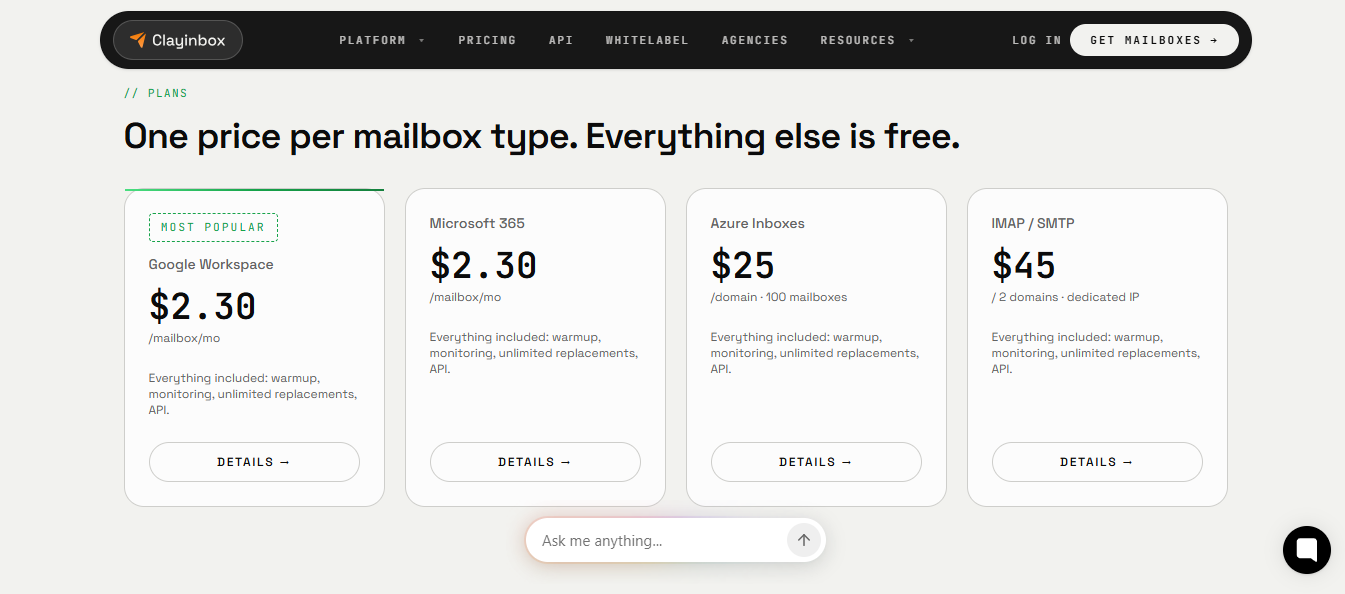
Clayinbox charges a single price per mailbox type, with warm-up, monitoring, unlimited replacements, and API access included in every plan.
InboxKit prices by cycle: $3.00 per mailbox per month, $2.70 per mailbox per quarter, and $2.50 per mailbox per year, plus $30 per Azure tenant. Warm-up is an additional $3 per mailbox.
At 50 Google mailboxes, that puts Clayinbox at $115 a month, compared to InboxKit's $300 monthly with warm-up, or $275 paid annually.
Best for: Agencies that want a real person helping diagnose deliverability problems, not just a dashboard showing that something went wrong.
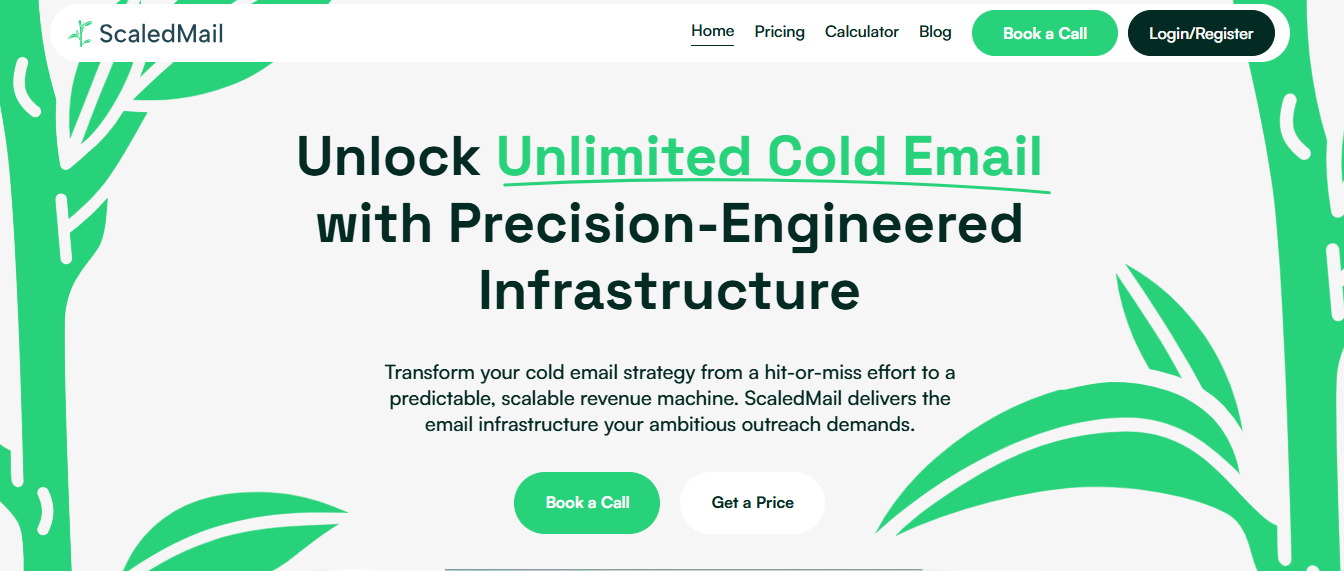
InboxKit starts with automated DNS setup and an AI-assisted flow, then hands you the dashboard. ScaledMail takes a more hands-on approach, putting humans on the account and routing support through a dedicated Slack channel.
When Microsoft flags a tenant or placement drops without a blacklist hit, the system that created your mailboxes usually cannot explain why. At that point, you are the one left figuring it out.
ScaledMail says it has managed more than 230,000 inboxes and runs 25 to 30 active campaigns at Beanstalk, its agency arm. That is the experience it is selling you access to.
ScaledMail also highlights a distinction worth considering when you shortlist providers. InboxKit advertises isolated domain panels.
ScaledMail runs isolated Microsoft 365 and Google Workspace tenants and argues that because ESPs assess reputation at the tenant level, panel isolation separates the interface, rather than the email infrastructure.
Pre-aged domains are the deciding factor here. ScaledMail sells domains that are 30, 90, or 180 days old and already have ESP history.
InboxKit gives you fresh domains, which usually means about two weeks of warm-up before you can send at volume. For an agency onboarding a client who signed last week, that gap is the whole point.
Neither includes a warm-up. ScaledMail says it tells you that upfront and guides you on ratios during setup. InboxKit charges $3 per mailbox per month.
InboxKit if you have in-house email deliverability expertise and want to run your own infrastructure. ScaledMail, if you have dealt with a placement drop that you could not explain.
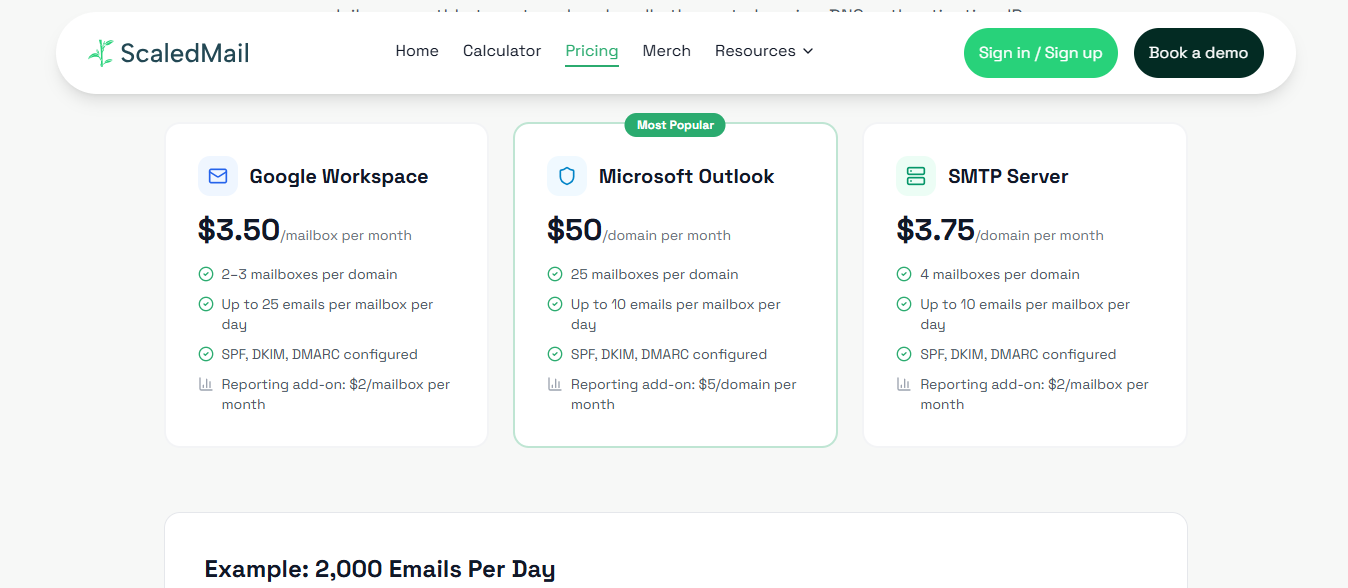
ScaledMail prices per inbox, with the rate dropping as volume increases.
InboxKit prices by cycle: $3.00 per mailbox per month, $2.70 per mailbox per quarter, and $2.50 per mailbox per year, plus $30 per Azure tenant. Warmup adds $3 per mailbox, and InfraGuard becomes paid after the first month.
Best for: Teams that want SMTP mailboxes alongside Google and Microsoft, with replacements covered by the platform.
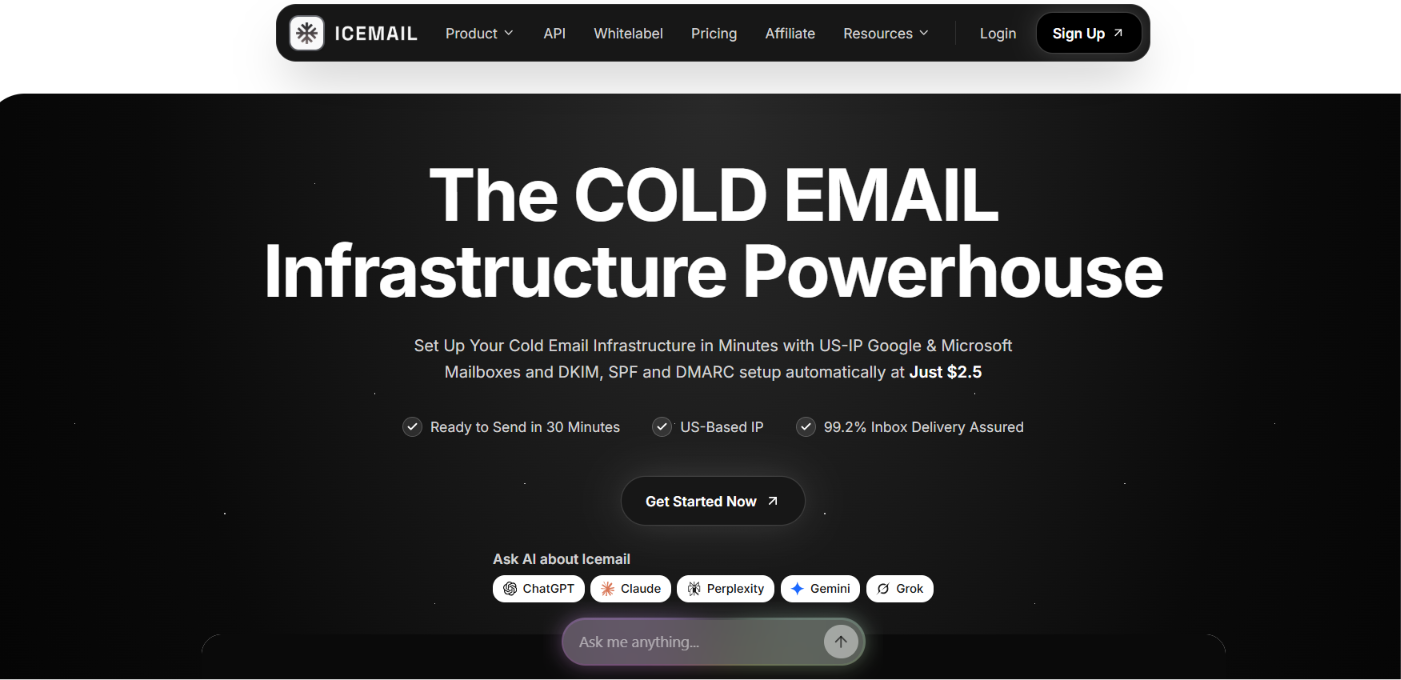
Icemail gives you a third sending path that InboxKit does not offer. You still get Google Workspace and Microsoft 365 on your own domains, but you also get SMTP mailboxes alongside them.
When Google tightens filters in a given quarter, that third option gives you capacity outside either ESP.
The other reason teams switch is replacements. Burned mailboxes are normal at volume, and most providers treat each one as a new charge. Icemail absorbs that cost, so your monthly number stays steady even in a rough month.
Icemail is also fair about what InboxKit does well. On its own comparison page, it credits InboxKit’s mailbox setup, automated DNS and authentication, and agency-friendly workspace structure.
It says it works with over 1,000 agencies and companies, including factors.ai, Affiniti, and Vectify. One feature worth knowing about is its AI Domain Finder, which surfaces and prepares sending domains, so you don't have to research them by hand.
Icemail starts at $2.50 per mailbox with no commitment cycle, compared with InboxKit’s $3.00 monthly rate. The gap gets bigger once mailboxes start burning because Icemail covers replacements, but InboxKit’s pricing page does not say it does.
Icemail also reports a 98% inbox placement rate, compared with its 95% benchmark. Neither figure includes a methodology, so treat it as positioning rather than measurement.
InboxKit if Google and Microsoft cover your needs, and you want deeper integration and catalog support. Icemail if your monthly cost needs to stay predictable even in a bad month.
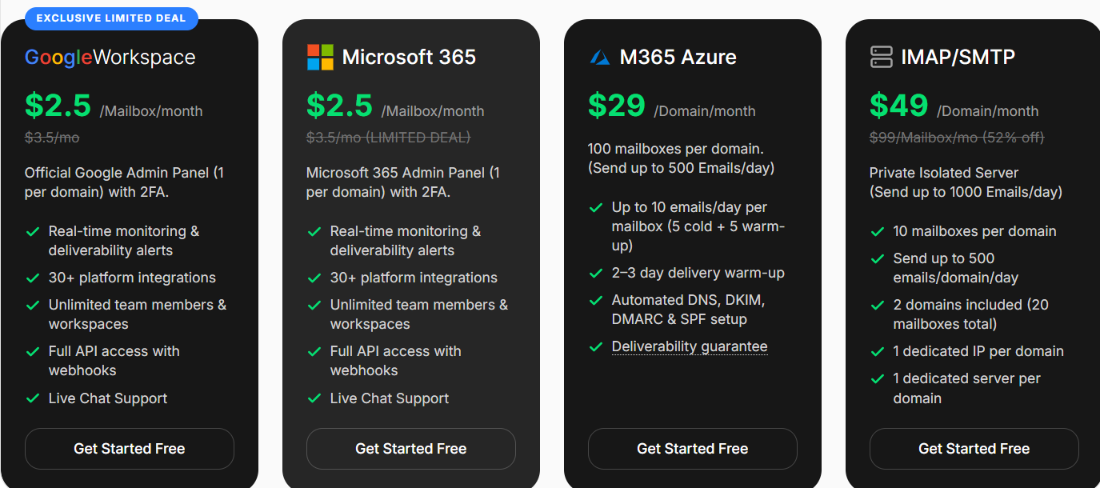
Icemail starts at $2.50 per mailbox with no platform fee and replacements included.
InboxKit prices by cycle: $3.00 per mailbox per month, $2.70 per mailbox per quarter, and $2.50 per mailbox per year, plus $30 per Azure tenant. Warmup adds $3 per mailbox.
At 50 mailboxes, Icemail runs $125 a month compared to InboxKit’s $300 with warm-up, or $275 paid annually.
Best for: Teams running high mailbox counts on SMTP, where mailbox cost and IP rotation matter more than Microsoft support.
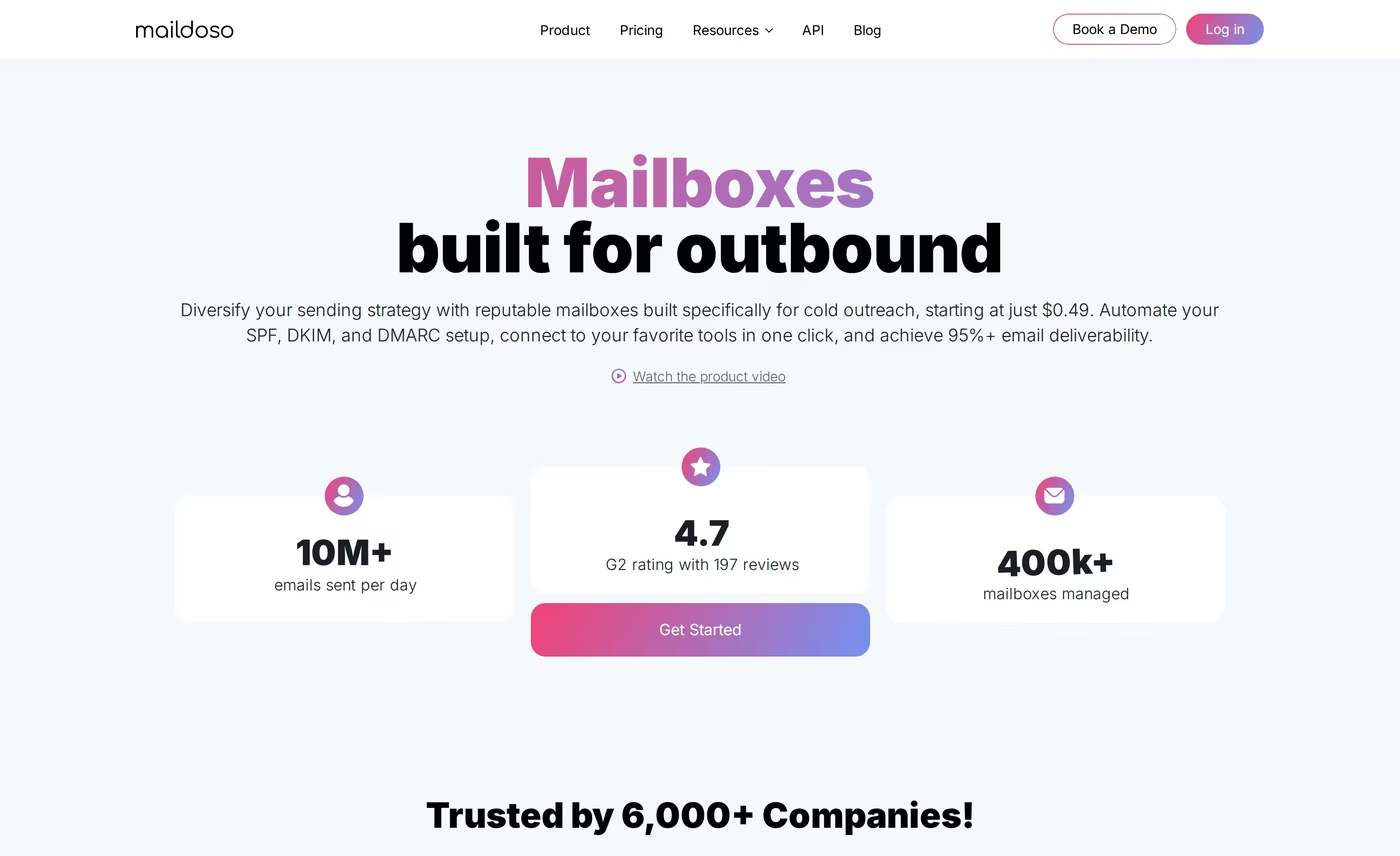
Maildoso takes the opposite approach to a dedicated IP. Instead of giving you a single address you own, it routes your mail through hundreds of rotating IPs. When one gets blacklisted, Maildoso swaps it automatically.
InboxKit mailboxes are sent from Google and Microsoft addresses, so there is nothing to rotate.
Mailbox health works similarly. Every mailbox rests on a two-week cycle to clear provider flags, which Maildoso calls self-healing.
It reports a spam rate of around 5% across its network as of May 2026, although that figure is self-reported and lacks a methodology.
The company sells domains, SMTP mailboxes, and Google Workspace accounts. Nikita Bykadarov founded it in August 2023 in Granite Bay, California. What you lose is Microsoft support: no Outlook, no Azure, and no built-in warm-up yet.
SMTP mailboxes start at $0.49. InboxKit does not sell SMTP at all, so this is a different sending path, not just a cheaper version of the same one.
Maildoso is also clear about what that price buys. It recommends 15 emails per box per day, so volume comes from running more mailboxes rather than pushing each one harder.
Maildoso is upfront about the gaps too. No Microsoft 365, Outlook, or Azure, and no built-in warm-up yet.
InboxKit if you need Outlook or Azure. Maildoso if you want SMTP at scale, IP rotation, or a way to test before you pay.
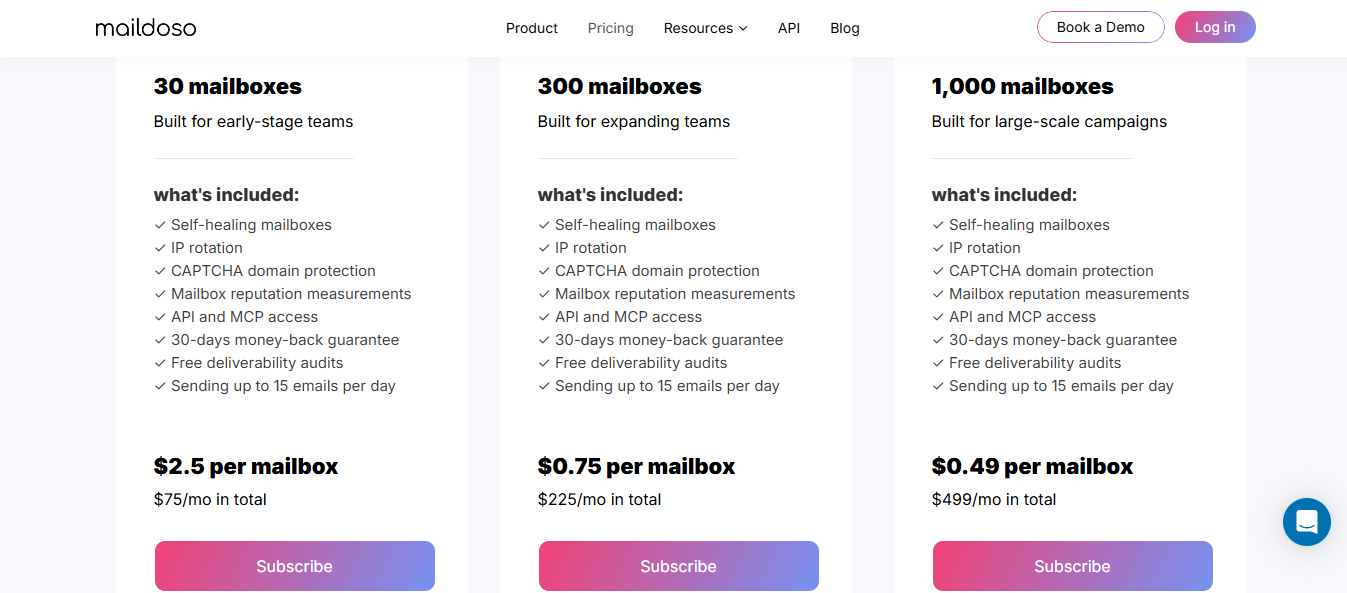
Maildoso prices in ranges, without explaining what moves you within them, so assume volume.
InboxKit prices by cycle: $3.00 per mailbox per month, $2.70 per mailbox per quarter, and $2.50 per mailbox per year, plus $30 per Azure tenant. Warmup adds $3 per mailbox.
Enter your email to get a custom plan & stack recommendation for your business
Please check your mailbox in 5 minutes

Infraforge is my pick for the best InboxKit alternative in 2026.
It solves the two big blockers that push teams away from InboxKit: you get your own dedicated IP, so your sender reputation is actually yours, and slot-based billing means you can swap out burned mailboxes at no extra cost.
The others each have their angle. Clayinbox wins on bundling warm-up and monitoring into the price. ScaledMail focuses on pre-aged domains and real human support.
Icemail is your move for cheap SMTP. Maildoso is the play if you care about cost per mailbox at scale.
But if you want to actually own your sending IP and stop mailbox churn from blowing up your invoice, start with Infraforge.