

Hypertide is an Azure and Entra inbox provider that ships isolated orders capped near 5,000 emails a month each. MailScale runs its own infrastructure but shares the IP pool across customers. Neither gives you a dedicated IP per mailbox.
For cold email infrastructure that scales without sharing your reputation, Infraforge is the stronger choice. Every mailbox gets a dedicated IP, DNS is automated, and mailboxes ship pre-warmed with ongoing Warmforge monitoring. Pricing runs $3 to $4 per mailbox a month.
I have set up cold email infrastructure for outbound teams on all three of these platforms, so this is a hands-on take, not a feature-sheet rehash.
The decision usually comes down to one question. How much control do you want over your sending reputation, and how much will you pay for it?
Hypertide sells ready-made Azure and Microsoft inboxes in isolated orders. MailScale generates inboxes fast on infrastructure it owns but shares across customers. Infraforge gives every mailbox its own dedicated IP on private infrastructure. One operator running Infraforge, Woodpecker, scaled past 2,500 mailboxes with zero major incidents, and that is the bar I measure the others against here.
Cold Email Infrastructure Comparison at a Glance: Hypertide vs MailScale
| Infraforge | Hypertide | MailScale | |
|---|---|---|---|
| Best for | Dedicated-IP isolation at scale | Outlook/Entra-native sending | Cheapest mid-volume shared setup |
| Infrastructure | Private; dedicated IP per mailbox | Azure/Microsoft; isolated tenant per order | Self-owned SMTP/IP, shared across users |
| Dedicated IPs | Yes, one per mailbox | Per-order isolation (domains, IPs, users) | No (shared pool; dedicated on $1,000+ plan) |
| Starting price | $3 to $4 / mailbox / mo | $50 / mo per order (+ one-time setup) | $79 / mo (Solopreneur) |
| Sending per inbox | 30 to 50 / day | ~2 / day (~5,000 / order / month) | 20 to 30 / day |
| Free trial | No (app explorable after signup) | No (demo-gated) | Yes, 7-day |
| Integrations | Salesforge + any sender; native Woodpecker | Smartlead, Instantly, Bison | Instantly, Smartlead, Apollo, Reply.io, Lemlist |
| Standout | SOC 2, Masterbox, white-label (20% rev share) | Native Outlook UI, 4 to 6 hr setup | 95 to 100% inbox guarantee |
Hypertide Overview
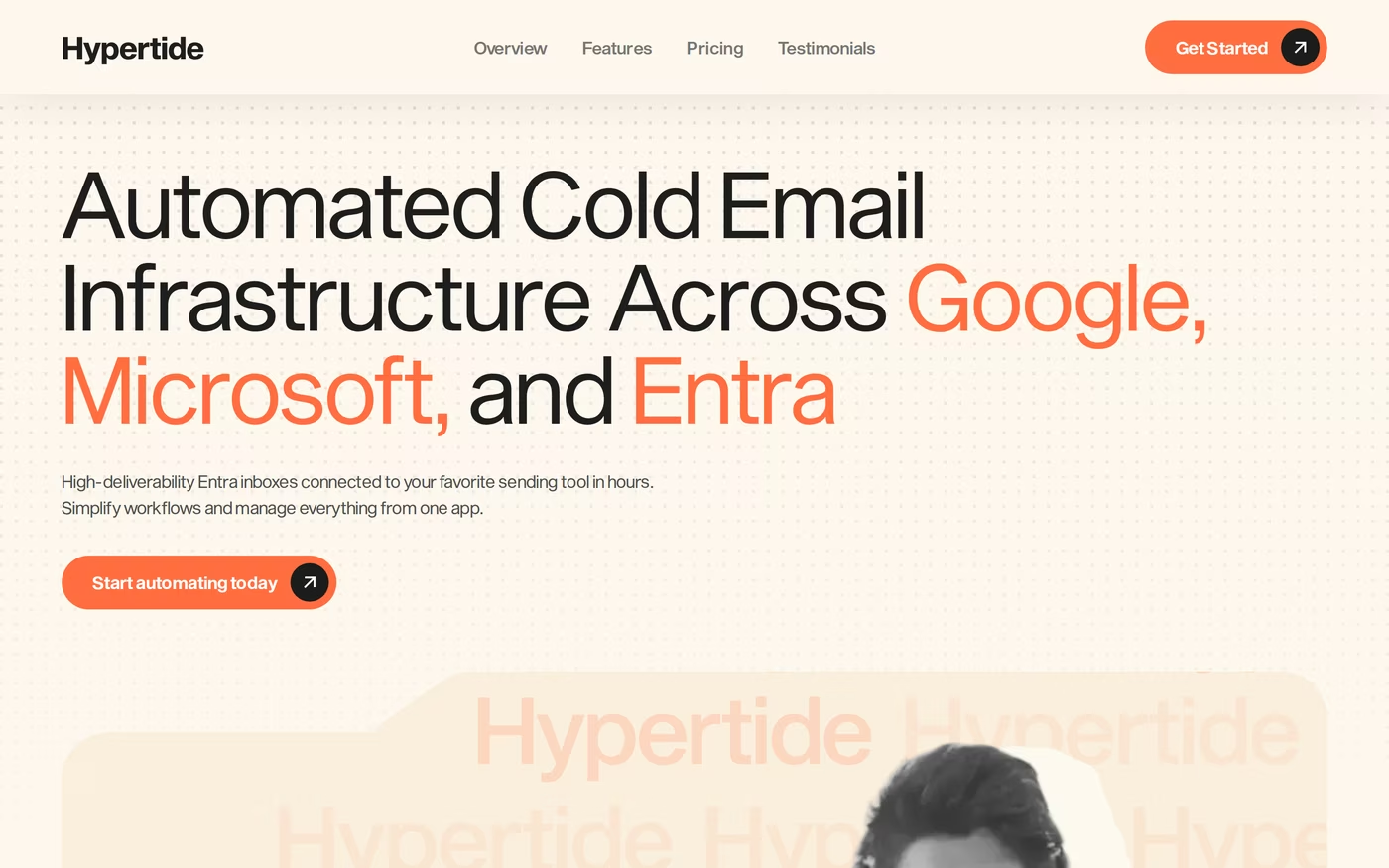
When I provisioned a Hypertide order, the setup ran on Microsoft's Azure and Entra stack. The Microsoft side is the whole pitch. Each order gives you a native Outlook experience through what Hypertide calls Entra, so the inbox looks and behaves like standard Outlook rather than a generic reseller panel.
Here is what an order includes:
- 100 Azure inboxes per order, split 50 across each of two domains, provisioned automatically
- A native Outlook UI through Hypertide Entra
- SPF, DKIM, and DMARC pre-configured on every order
- An isolated tenant per order with its own domains, IPs, and users
- Automated setup that finishes in about four to six hours
- Connections to Smartlead, Instantly, and Bison
- Bring-your-own domains for free, or buy through Hypertide for about $30
Pricing is simple: $50 a month per order, plus a one-time setup fee. There is no free trial. Access is gated behind a demo or a direct email to the founder, and the company launched in August 2024.
Hypertide fits senders who target Outlook-heavy audiences and want a low entry price with Microsoft-native inboxes.
The honest limitations:
- Each inbox sends about two emails a day after a two-week warmup, roughly 5,000 a month across a 100-inbox order
- Heavy reliance on the Microsoft ecosystem, which some operators treat as single-vendor risk
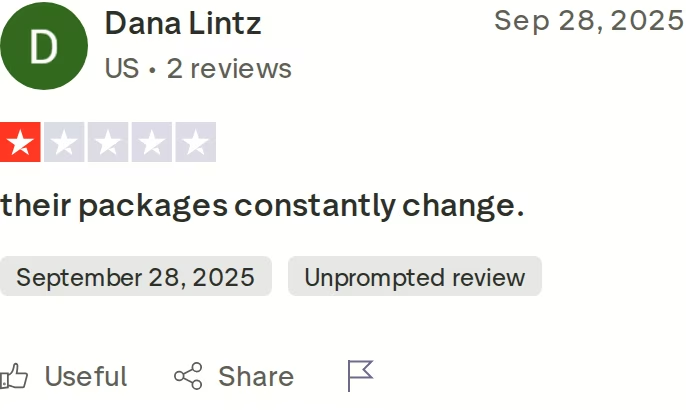
- A few users report occasional DMARC misconfiguration and shifting package definitions
- No self-serve trial; you book a demo first
Its Trustpilot page is still thin given the 2024 launch, and the critical review I found flags packages changing over time. If you want substitutes, Infraforge keeps a roundup of Hypertide alternatives.
MailScale Overview
MailScale brands itself the #1 cold email inbox provider, and it is the volume play. Founded by Yassin Baum, it claims more than 3,000 customers. It owns its full stack of SMTP servers and IP pools rather than renting from Google or Microsoft.

What you get:
- Inboxes that spin up in roughly one to five minutes
- Self-owned SMTP servers and IP pools
- Connections to Instantly, Smartlead, Apollo, Reply.io, Lemlist, and Mailshake
- A deliverability guarantee of 95 to 100 percent placement to professional inboxes
- Domain recovery or replacement within 30 days if placement drops below 80 percent
- A cold-email course bundled into the Business plan
- Bring-your-own domain for $2, or buy inside for about $10 to $15 a year
Pricing is tiered. MailScale Solopreneur is $79 a month for up to 15 inboxes. MailScale Business is $119 for up to 50 inboxes plus the course. MailScale Enterprise is $249 for up to 200 inboxes, with extra inboxes at $1.50 each. Above that, an Unlimited Mailboxes plan starts at $1,000 a month and adds dedicated IPs, a self-healing mechanism, and a dedicated deliverability specialist. Annual billing is cheaper, and MailScale recommends 20 to 30 emails per inbox a day. Infraforge's MailScale review goes deeper on the tiers.
MailScale fits mid-volume senders who want the lowest monthly price with a written deliverability guarantee, and beginners who value the bundled course.
The honest limitations:
- The IP pool is shared across customers, so a neighbor's sending can affect your placement
- Crossing 200 inboxes means per-inbox fees or the $1,000-plus plan
- Some users report deliverability dropping in the second week, as warmup turns into live volume
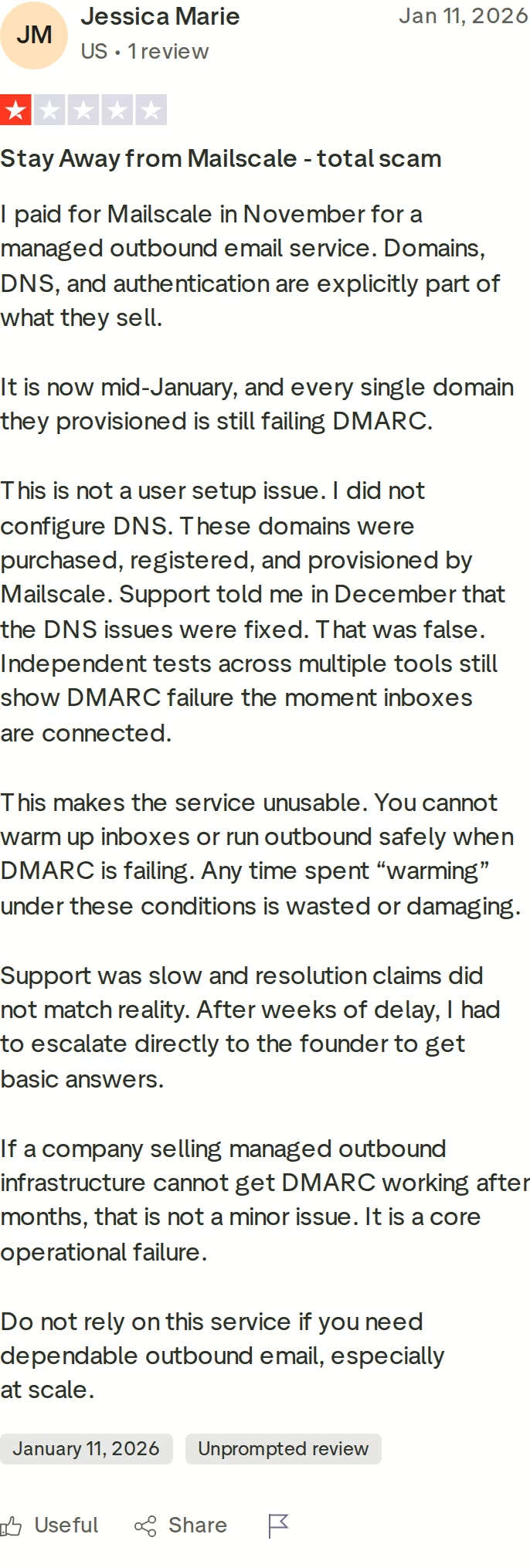
The most detailed critical review I read describes domains still failing DMARC months after purchase.
Infraforge Overview
Infraforge is the dedicated-infrastructure option in the Forge stack, and the difference shows up everywhere else in this comparison. Every mailbox gets its own dedicated IP, so your sending reputation never depends on a stranger's behavior.
What Infraforge gives you:
- A dedicated IP behind every mailbox
- Automated DNS for every domain: DMARC, SPF, DKIM, and custom tracking
- Pre-warmed domains and mailboxes, so you skip the multi-week ramp
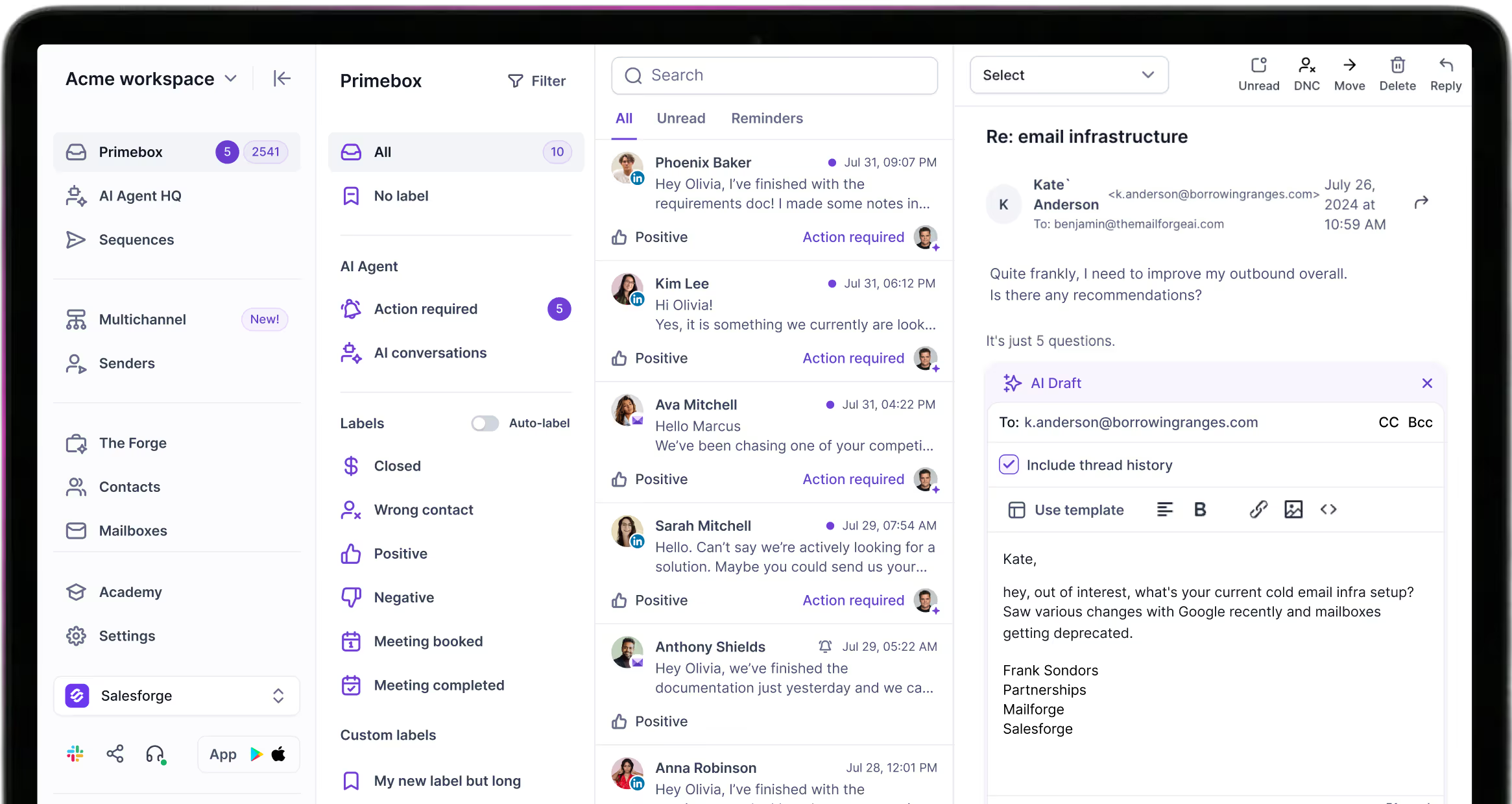
- Masterbox, one dashboard for every account in a workspace
- Multi-IP provisioning as you grow
- SSL and domain masking
- A full API for programmatic control
- Real-time deliverability monitoring
- SOC 2 compliance
- A white-label reseller program with a 20 percent revenue share
Infraforge is the infrastructure layer of a wider stack. You can warm mailboxes with Warmforge, add Google or Microsoft mailboxes through Primeforge, and send through Salesforge, all part of the Forge stack. You can also browse more tools in the Forge directory.
Pricing scales down as you grow, from $4 to $3 per mailbox a month. That is about $33 a month for 10 mailboxes billed annually, and around $651 a month for 200 mailboxes, roughly $3.30 each. Best practice is 30 to 50 emails per inbox a day. There is no free trial, but you can explore the app after signing up.
Grab Your Infraforge MailboxesInfraforge fits teams and agencies that send at volume and treat deliverability as a priority. These are senders who want isolation and control more than the cheapest sticker price. The agency infrastructure guide covers how teams run client sending in isolated workspaces, and because mailboxes ship pre-warmed you spend less time on the usual IP-warming checklist.
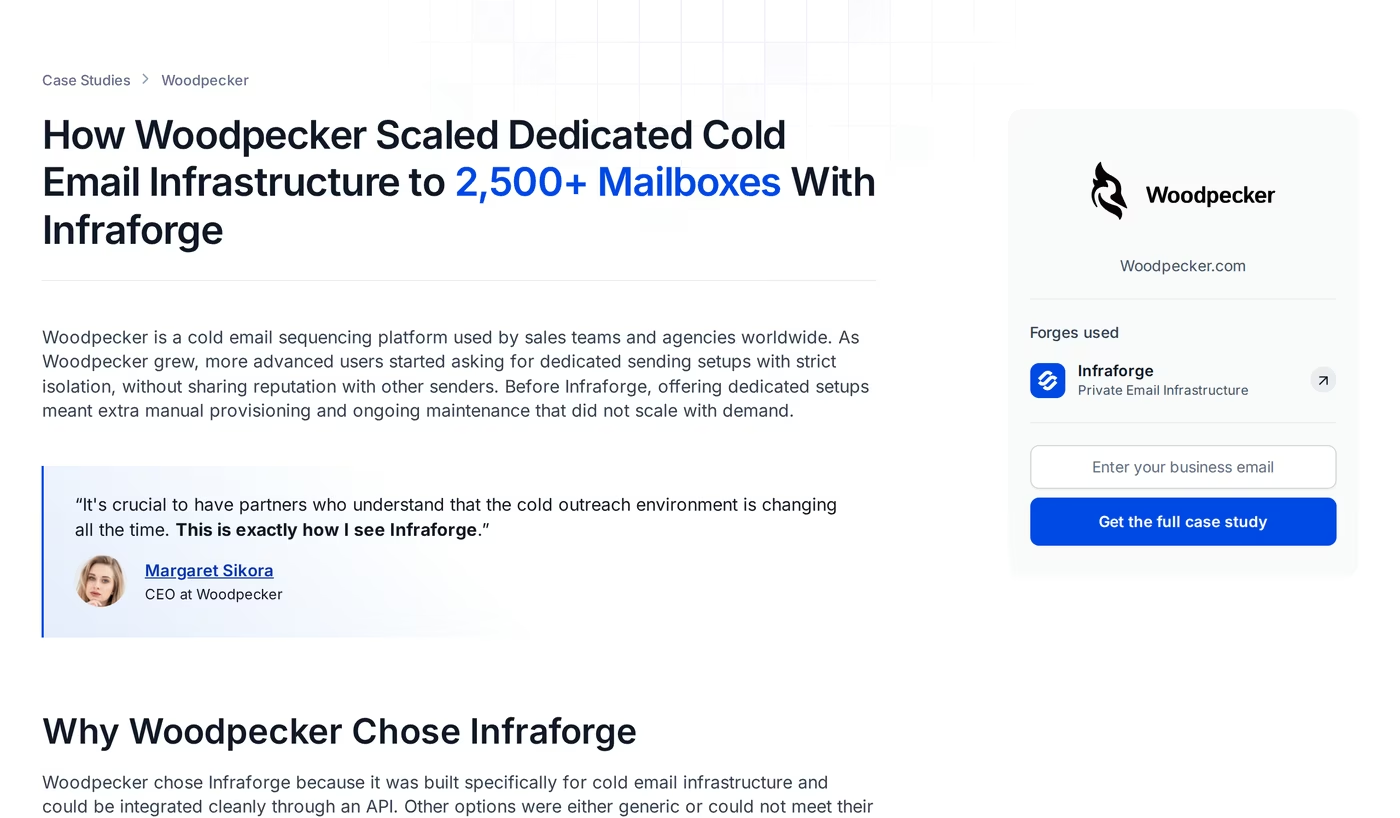
One published example is Woodpecker, which scaled dedicated cold email infrastructure to more than 2,500 mailboxes on Infraforge with 100 percent API uptime and zero major incidents.
The honest limitations:
- No free trial, though the app is explorable after signup
- You still run sending through your own tool or Salesforge; Infraforge is the infrastructure, not the sequencer
- Dedicated IPs cost more per mailbox than a shared pool
in Action
Head-to-Head Feature Comparison: Hypertide vs MailScale
Infrastructure and IP isolation
This is the sharpest divide. Infraforge gives every mailbox a dedicated IP, so your reputation is yours alone. Hypertide isolates at the order level, with each order its own tenant of domains, IPs, and users, which is strong but coarser than per-mailbox. MailScale shares one IP pool across customers unless you reach its $1,000 plan, so a noisy neighbor can drag your placement down. If isolation is what you care about, the dedicated-IP model wins.
Email deliverability and warm-up
All three authenticate properly with SPF, DKIM, and DMARC. Infraforge ships mailboxes pre-warmed and watches deliverability in real time, and you can layer Warmforge on top. MailScale backs sending with a written 95 to 100 percent guarantee and replaces domains that fall below 80 percent placement, which is the most explicit safety net here. Hypertide leans on Microsoft's warmup pools. Either way, I warm any new mailbox for two weeks first, as the deliverability guide explains.
Throughput per inbox
Per-inbox volume is where the headline prices mislead. Infraforge supports 30 to 50 emails per inbox a day, and MailScale 20 to 30. Hypertide caps around two per inbox a day after warmup, about 50 a month. Matching a given daily volume on Hypertide takes far more inboxes than on the other two, which I show in the pricing section.
Setup and onboarding
MailScale is the fastest to a working inbox, often within minutes, and the friendliest to beginners with its bundled course. Hypertide automates provisioning in four to six hours and gives you a native Outlook experience. Infraforge ships pre-warmed mailboxes, trading a little upfront speed for less reputation risk on day one.
Pricing and scalability
Hypertide is cheapest to start at $50 an order, but it scales expensively because of the per-inbox volume cap. MailScale is cheapest at mid volume, with hard tier breakpoints at 50 and 200 inboxes. Infraforge charges per mailbox with no hard cap, so the cost curve stays smooth as you add mailboxes.
Integrations and ecosystem
All three plug into the major sequencers like Instantly and Smartlead. MailScale lists the widest set, adding Apollo, Reply.io, Lemlist, and Mailshake. Infraforge integrates natively with Salesforge and Woodpecker and exposes a full API. It is also the only one of the three advertising SOC 2 compliance and a white-label program.
Pricing Compared at Real Sending Volume
| Plan | Monthly price | Inboxes | Infrastructure |
|---|---|---|---|
| Infraforge | $3 to $4 / mailbox | Any (no hard cap) | Dedicated IP per mailbox |
| Hypertide | $50 / order (+ setup) | 100 per order | Isolated Azure tenant |
| MailScale Solopreneur | $79 | Up to 15 | Shared IP pool |
| MailScale Business | $119 | Up to 50 | Shared IP pool |
| MailScale Enterprise | $249 | Up to 200 | Shared IP pool |
| MailScale Unlimited | $1,000+ | Unlimited | Dedicated IPs |
Headline prices are easy to misread because they are quoted per inbox or per order, not per email delivered. The honest way to compare is to fix a target and see what each costs to hit it. Take a common mid-size agency goal of about 5,000 cold emails a day, or roughly 150,000 a month.
| Provider | Inboxes / orders for ~5,000/day | Monthly cost | Infrastructure |
|---|---|---|---|
| Infraforge | ~150 mailboxes (or the 200 tier) | ~$495 to $651 | Dedicated IP per mailbox |
| MailScale Enterprise | Up to 200 inboxes | ~$249 | Shared IP pool |
| Hypertide | ~30 orders (≈3,000 inboxes) | ~$1,500 + setup + ~60 domains | Isolated Azure tenants |
Here is the catch the sticker prices hide. Hypertide's $50 order is the cheapest per inbox, but each inbox sends only about 50 emails a month. That is roughly a tenth of an Infraforge or MailScale inbox. To reach agency volume you buy dozens of orders, and Hypertide becomes the most expensive option on this list.
MailScale wins on raw monthly price at this volume, as long as you accept a shared IP pool. Infraforge sits in the middle on price and is the only one giving every mailbox a dedicated IP, which is the setting that most protects inbox placement as you scale. Always confirm current rates on the Infraforge pricing page, since tiers change.
Decision Matrix: Which Tool to Choose
You might consider Hypertide if:
- Your prospects are mostly on Outlook and you want Microsoft-native inboxes
- You want the lowest entry price and send at low volume per inbox
- You prefer isolated, ready-made orders over managing mailboxes yourself
You might consider MailScale if:
- You want the lowest monthly price at mid sending volume
- A written deliverability guarantee matters to you
- You are new to cold email and want a bundled course
Choose Infraforge if:
- You send at volume and treat deliverability and reputation as a priority
- You want a dedicated IP behind every mailbox, not a shared pool
- You need to scale without hitting hard tier breakpoints
- You run an agency or want to resell infrastructure under your own brand
- You need SOC 2 compliance and a full API
Infraforge is not the cheapest sticker price. If you only need a handful of inboxes at the lowest possible cost, a shared pool may be enough for you.
Final Verdict: Which Cold Email Infrastructure to Choose
After setting up all three, my recommendation is straightforward. For cold email infrastructure that has to scale while protecting your sending reputation, Infraforge is the strongest pick. It is the only one of the three that puts a dedicated IP behind every mailbox, automates the full DNS and warmup stack, and carries SOC 2 compliance and a white-label program.
Hypertide is a fit for low-volume sending into Outlook audiences at a low entry price. MailScale offers the lowest monthly cost at mid volume on shared infrastructure.
Here is a claim you can hold me to. Woodpecker scaled dedicated cold email infrastructure to more than 2,500 mailboxes on Infraforge, with 100 percent API uptime and zero major incidents. If you can find a shared-IP provider publishing a deployment at that size and reliability, weigh it seriously. Until then, dedicated IPs are earning their cost.
Want more head-to-heads? Browse the full set of Salesforge comparisons.
Frequently Asked Questions
Is Infraforge better than MailScale for deliverability?
They take different approaches. Infraforge assigns a dedicated IP to every mailbox, so your reputation is isolated from other customers. MailScale owns its infrastructure but shares the IP pool across users unless you are on the $1,000 Unlimited plan, which means a neighbor's behavior can influence your placement. For senders whose top priority is protecting reputation at scale, dedicated IPs are the safer model. MailScale offsets the shared-pool risk with a written 95 to 100 percent guarantee and domain replacement.
How much does each cost for 200 inboxes?
Infraforge is about $651 a month for 200 dedicated-IP mailboxes, roughly $3.30 each. MailScale Enterprise covers up to 200 inboxes at about $249 a month on shared infrastructure. Hypertide would need two orders for 200 inboxes at $100 a month plus setup fees and four domains. Those 200 Hypertide inboxes are capped near 10,000 emails a month combined, far below what 200 Infraforge or MailScale inboxes can send.
Does Hypertide really only send about 5,000 emails a month per order?
Yes. Hypertide rates each Azure inbox at roughly two outbound emails a day after a two-week warmup. Across the 100 inboxes in an order, that is about 5,000 emails a month, or around 50 per inbox a month. It is built for low-volume, high-deliverability sending across many inboxes rather than high daily throughput per inbox.
Can I use these with Instantly or Smartlead?
All three integrate with the major sequencers. Hypertide connects to Smartlead, Instantly, and Bison. MailScale connects to Instantly, Smartlead, Apollo, Reply.io, Lemlist, and Mailshake. Infraforge integrates natively with Salesforge and works with effectively any sending tool, plus a native Woodpecker integration.
Does Infraforge offer a free trial?
Infraforge does not offer a free trial, but you can explore the app after signing up. Among the three, only MailScale offers a self-serve free trial, which runs 7 days. Hypertide is demo-gated with no trial, so you book a call before you can buy.
Which is best for agencies or white-label reselling?
Infraforge. It offers a white-label reseller program with a 20 percent revenue share, isolated client workspaces, multi-IP provisioning, and a full API, which is the toolkit agencies need to run and resell infrastructure under their own brand. Hypertide lets you manage multiple clients from one dashboard but does not advertise a revenue-share program.