To be fair, Outreach helped build the sales engagement category.
But if you're reading this, there's a good chance you're not looking for another list of everything Outreach can do.
You're probably wondering whether it's still worth paying for.
Maybe your renewal quote came in higher than expected. Maybe your team only uses a fraction of the features. Or maybe you're tired of dealing with a platform that feels bigger and more complicated every year.
And you're not alone.
I spent hours digging through more than 3,500 recent G2 reviews, and the same complaints kept showing up. Users talked about rising costs, a product that feels stuck in the past, and support that often takes too long when something breaks.
The truth is that Outreach has evolved into a much broader revenue platform. It now includes AI agents, forecasting, coaching, deal management, and a lot more.
That's great if you need an all-in-one enterprise system.
But if your goal is simply to run cold email and LinkedIn outreach, book meetings, and keep your outbound process moving, there are tools that do the job with far less complexity and cost.
To help you find the right fit, I tested the leading alternatives and narrowed the list down to five.
Here's what you'll find in this guide:
Let's get into it.
The G2 data tells a clear story.
Here are the five reasons that show up most often, backed by actual reviewer quotes.
Outreach doesn't publish pricing. You have to sit through a demo just to see a number. Every third-party source reports $100 to $165 per user per month on annual contracts only. Onboarding fees run $5,000 to $15,000+ on top.
For a 15-person SDR team, that's $18,000 to $30,000 per year before you've sent a single email.
"They sent us to collections even though we told them we gave a 30-day notice." — Kevin H., CTO/Co-Founder, Small Business (0.5/5 on G2)
Outreach is dense. The UI changes constantly. New hires take weeks to figure out the platform. If you're running straightforward cold outbound and not managing enterprise deal cycles with 12 stakeholders, most of the platform goes unused.
"The interface is extremely dense... onboarding a new hire can take weeks rather than days." — Verified User, Enterprise (G2, April 2026)
The same problems come up in review after review. Salesforce sync failures lead to duplicate contacts and broken field mappings. These are not edge cases. They show up repeatedly across recent reviews.
"Ever since we switched to Outreach it's been a constant battle to see what the next bug will be." — Verified User, Mid-Market (0.5/5 on G2)
The pattern here is consistent. CSM turnover leaves teams without a point of contact. Ticket responses take days. Escalations lead nowhere.
"Really bad customer support. Their billing and support portal never logs in. They never reply to emails." — Vipul A., CRO, Small Business (0/5 on G2)
Multiple reviewers called this out. Competitors have shipped AI SDRs, native LinkedIn automation, and autonomous outreach agents. Meanwhile, Outreach's sequencing product looks the same as it did two years ago.
"The engage product is stagnant. Same features, UX, integrations and issues as it has had for the past 2 years." — Matthew T., Head of Revenue Operations, Mid-Market (1.5/5 on G2)
I didn't just compare feature lists for this roundup. I ran campaigns, connected mailboxes, tested AI capabilities, and tracked what actually moved the needle for reply rates and booked meetings.
Each tool below gets the same treatment: what it does, where it beats Outreach, where it falls short, and what it actually costs.
If you want the full picture on how these stack up in the broader email automation tools landscape, I covered that in a separate deep dive. This post is specifically about replacing Outreach.
Let's walk through each one.
Best for: Teams that need email and LinkedIn outreach in one sequence with unlimited senders and no per-seat pricing.
The best alternative to Outreach on my list is Salesforge, and it comes down to one thing Outreach still hasn't figured out: native multi-channel execution.
Outreach calls itself multi-channel. But open the platform and look at what "multi-channel" actually means. Email is automated. The phone is automated via the dialer. But LinkedIn? It's a manual task step. Outreach reminds your reps to go visit a LinkedIn profile or send a connection request. It doesn't do it for them.
Salesforge takes a different approach. Email and LinkedIn run inside the same sequence, both automated. You get unlimited LinkedIn senders alongside unlimited email senders.
Which means your team can run a sequence that sends a cold email on day one, follows up on LinkedIn on day three, and sends a second email on day five. All from one dashboard, with no manual steps in between.
That's a meaningful difference. Multi-channel outreach shouldn't mean "email automation with LinkedIn homework."
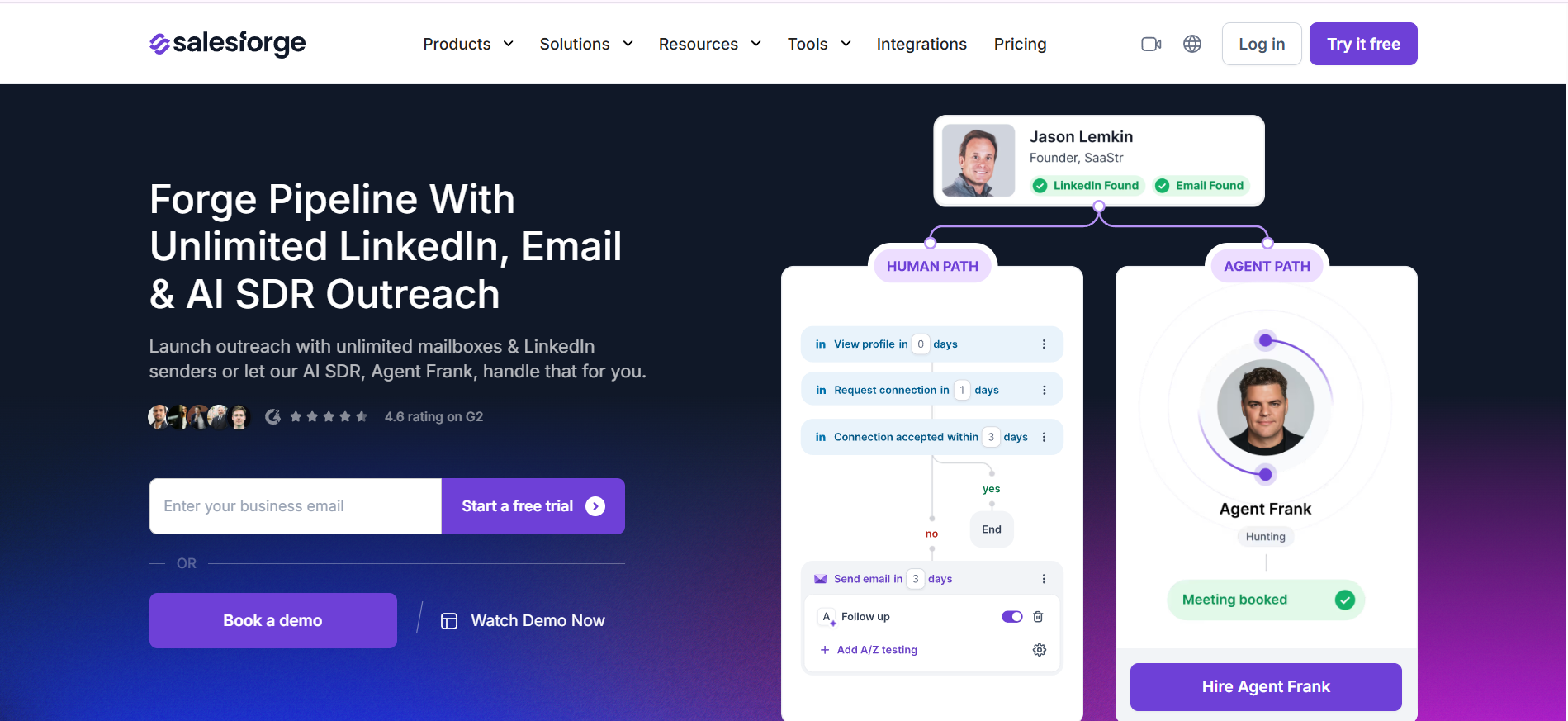
I connected 15 mailboxes and 4 LinkedIn profiles, built a 5-step sequence mixing both channels, and launched it in under an hour. Primebox™ pulled all replies from both email and LinkedIn into a single inbox view. I didn't have to bounce between tabs or platforms to manage responses.
A few other features stood out during testing. ESP matching automatically aligns your sending provider to the recipient's provider for better inbox placement. Smart mailbox rotation distributes sending across all connected accounts. And the AI personalization engine writes unique emails per lead, not just swapped merge tags.
Salesforge also sits inside a broader ecosystem called the Forge stack.
Leadsforge handles lead data with 500M+ verified contacts. Warmforge handles email warmup and deliverability monitoring. Infraforge and Mailforge handle email infrastructure with dedicated or shared IPs. Each product is separately subscribed but built to work together.
Try Salesforge free, no credit card required
Best for: Teams that want an autonomous AI SDR to prospect, write, send, and book meetings without human intervention.
The next Outreach alternative on my list is Agent Frank. And this one competes directly with the AI agents Outreach has been building into its Amplify platform.
Here's what Outreach offers on the AI front. There's a Research Agent that surfaces targeting signals. A Revenue Agent that manages pipeline data. A Personalization Agent that helps tailor messaging. A Meeting Prep Agent that briefs reps before calls. And a Deal Agent that flags pipeline risks.
They all sound impressive on paper. But they all do the same thing: they assist your reps. Your reps still write the emails. Your reps still manage the sequences. Your reps still handle the follow-ups and book the meetings.
Agent Frank takes a completely different approach. He doesn't assist. He executes.
I set up Agent Frank on Auto-Pilot mode. I gave him my ICP criteria (job titles, industries, company sizes, locations), uploaded my pitch deck and case studies to the knowledge base, and let him run. Within two weeks, he had booked 14 meetings without me touching a single email.
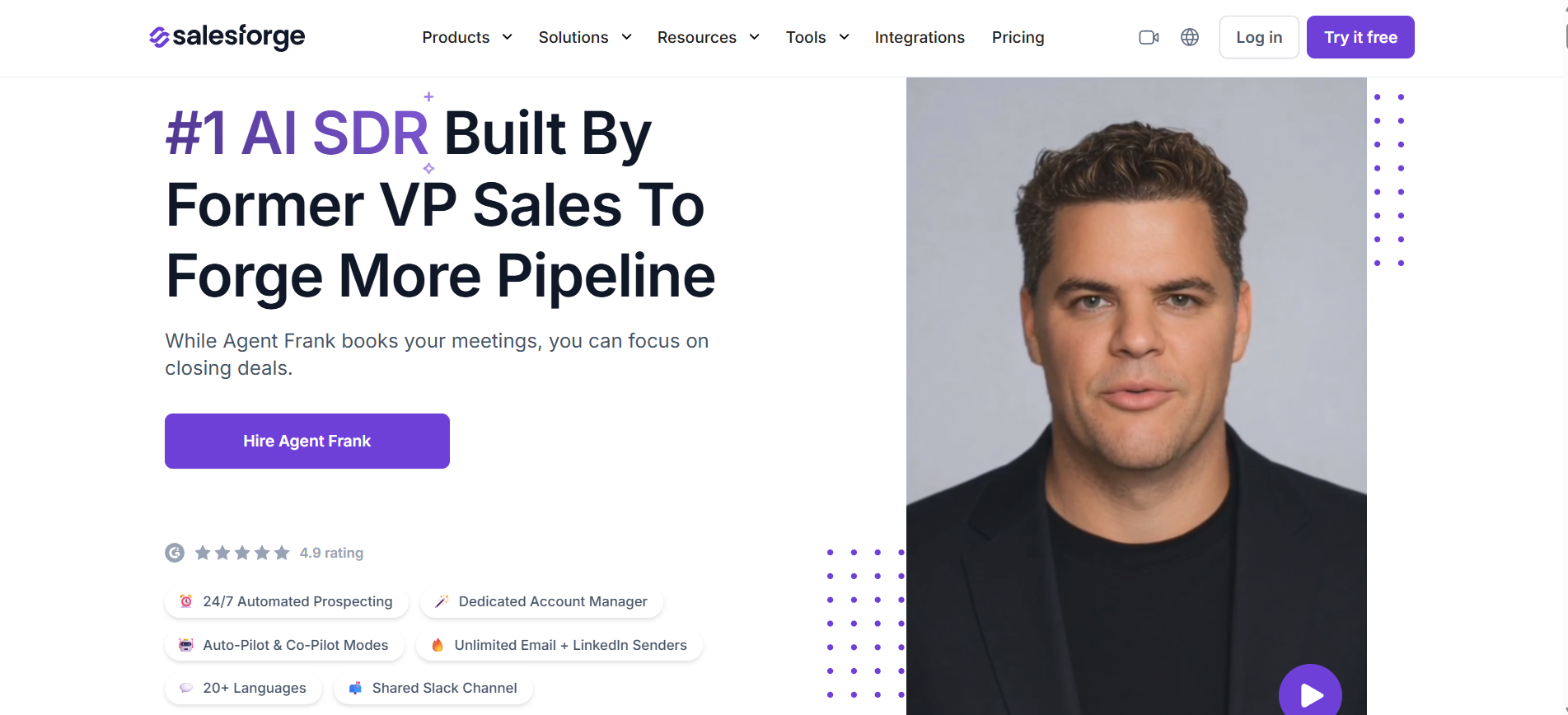
He prospects new leads based on my ICP through continuous prospecting. He writes personalized first-touch emails in 20+ languages. He sends follow-up sequences. He handles replies. He books meetings. All of this happens 24/7, without human approval in Auto-Pilot mode.
If you want to review what he sends before it goes out, Co-Pilot mode lets you approve each email. I used Co-Pilot for the first week to check his messaging quality, then switched to Auto-Pilot once I was confident in the output.
One thing that surprised me was the Knowledge Base feature. Once I uploaded product documentation and our website URL, Agent Frank's emails actually referenced our product correctly. He wasn't sending generic outreach. He was selling our specific product with accurate details.
I also got a dedicated account manager and a shared Slack channel for ongoing optimization. That level of hands-on support is rare for an AI product at this price point.
The key difference between Agent Frank and Outreach's AI agents is simple. Outreach built AI that makes your SDR team 20% faster. Agent Frank replaces the SDR work entirely. For teams that can't afford to hire five more reps but need five times the outbound volume, that's a fundamentally different value proposition.
If you want to understand how this kind of AI-driven cold email infrastructure works at scale, I covered the technical side in a separate post.
Agent Frank: $499/mo (quarterly billing)
Best for: Lean sales teams that need a B2B contact database and email sequencing without paying for two separate tools.
The next Outreach alternative I tested is Apollo.io. And its biggest advantage over Outreach is something Outreach doesn't even offer: a built-in lead database.
Here's what I mean. Outreach is a sequencing tool. You bring your own data. That means buying a separate subscription to ZoomInfo at $15K to $45K per year, Cognism, or a similar provider just to fill your sequences with leads.
Apollo bundles 210M+ contacts with email addresses, phone numbers, intent data, and advanced filters directly inside the sequencing platform. I built an ICP-filtered list, enriched the contacts, and dropped them into a multi-step sequence without leaving the app.
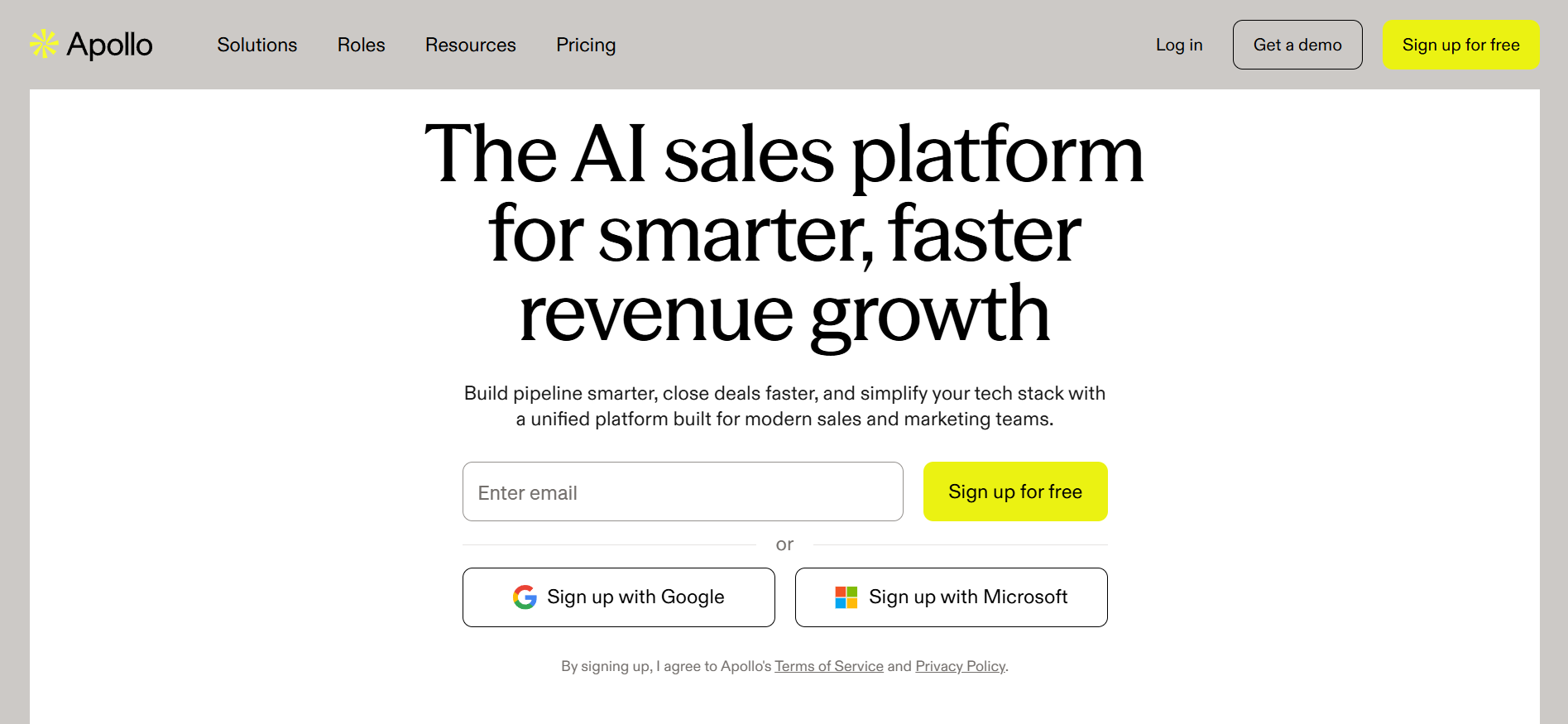
For lean teams that want data and engagement in one tool at a transparent price, Apollo is the easiest Outreach alternative to justify.
The Chrome extension is also one of the best in the market. It surfaces contact data on LinkedIn profiles, company websites, and inside Salesforce or HubSpot in one click. My reps used it more than any other prospecting feature.
But Apollo isn't perfect. Data accuracy varies, especially outside North America. I saw 10 to 15 percent bounce rates on some EMEA lists. And the sequencing engine, while solid for most teams, doesn't match Outreach's depth for complex multi-step enterprise plays.
If you're evaluating tools beyond Apollo, I also covered a broader set of Apollo.io alternatives on the Infraforge blog.
Best for: Cold email specialists and agencies who need to send at scale without per-seat pricing eating into margins.
Another Outreach alternative worth considering is Instantly.ai, especially if your outbound motion is email-first and volume matters more than multi-channel capabilities.
The pitch from Instantly is straightforward. You get unlimited email accounts, unlimited warmup, and flat-fee pricing. A 10-person team on the Hypergrowth plan pays $97 per month total. The same team on Outreach would pay $1,500+ per month minimum.
That math alone is why Instantly has racked up 4,110 G2 reviews and a 4.8 rating. For cold email volume, nothing else comes close on price.
I set up 30 email accounts across 10 domains, connected them to Instantly, and warmup kicked in automatically. Within two weeks I was sending 500+ emails per day through rotated accounts with built-in reputation protection and bounce detection.
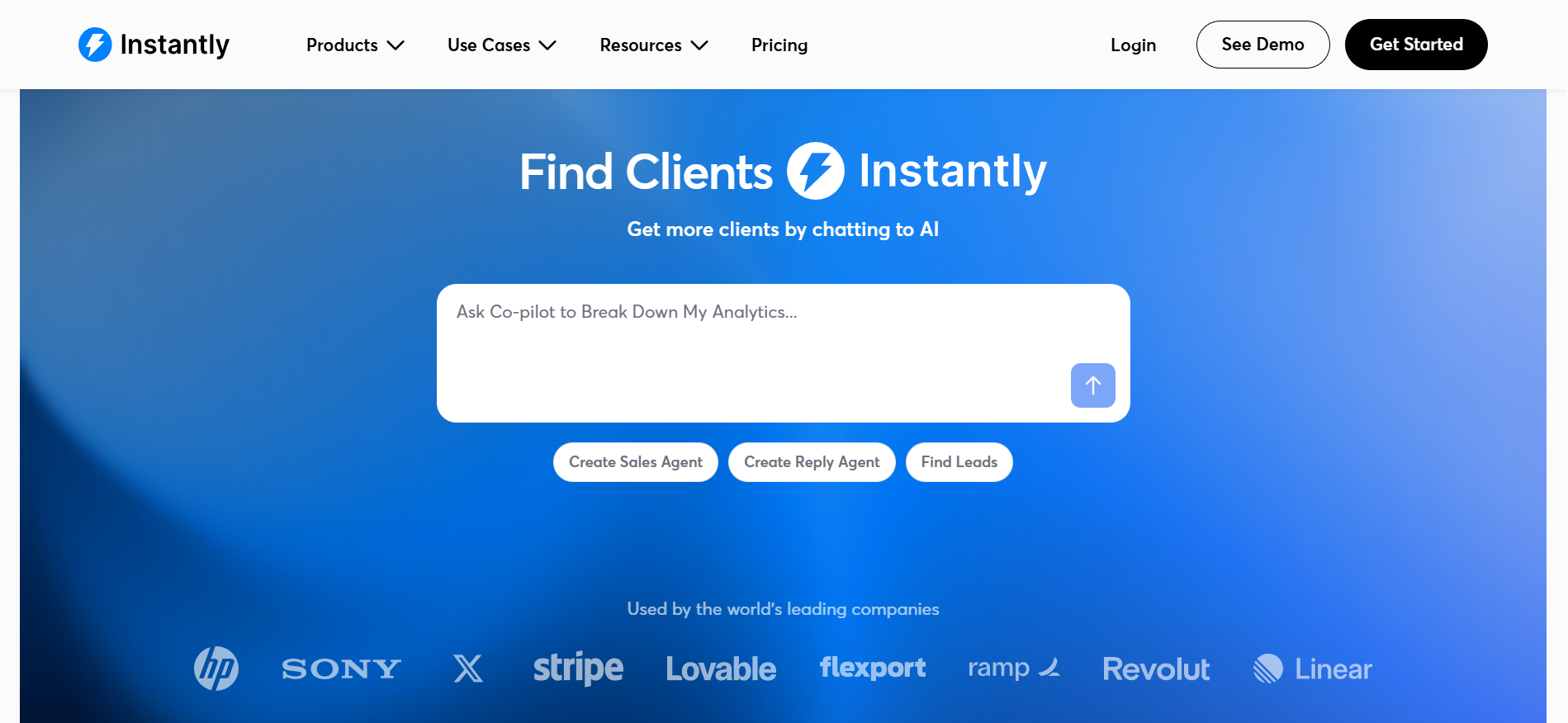
The Unibox, which is Instantly's unified inbox, puts all replies from all accounts in one view. It's clean and fast. For a pure email tool, the workflow is hard to beat.
But here's the trade-off. Instantly is a sending platform, not a multi-channel outreach tool. There's no LinkedIn integration, no phone dialer, and no deal management. And the "unlimited" branding hides some fine print because active contact limits cap your campaigns on every tier.
The other catch is that Instantly splits its platform into separate products for Outreach, Leads, CRM, and AI Agents, each with separate pricing. Heavy users can end up paying for three or four subscriptions stacked on top of each other.
If budget is the priority, I compared more options in my cheapest cold email software roundup.
Best for: Lead gen agencies that need whitelabel client portals, multi-client management, and volume sending from one platform.
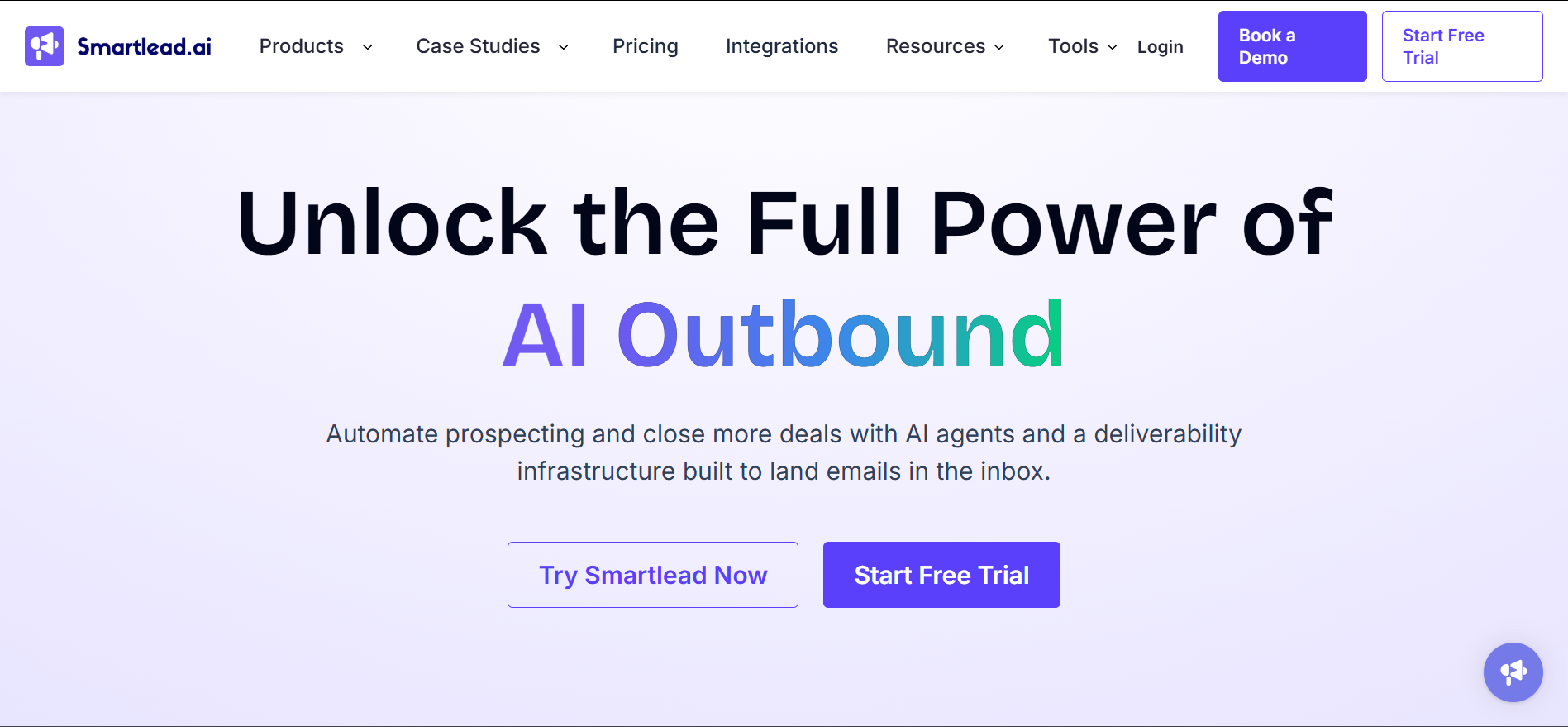
The fifth Outreach alternative on my list is Smartlead. It fills a gap that Outreach, Apollo, and Instantly don't even try to address, which is agency-scale client management.
If you run an outbound agency managing 10, 20, or 50 client accounts, Outreach is the wrong tool entirely. There are no whitelabel portals, no multi-workspace management, and no master inbox that separates client campaigns.
Smartlead was built for exactly this. Whitelabel client portals let you brand the platform as your own. The master inbox centralizes replies across every client account. Conditional sequences with branching logic let you build sophisticated campaigns per client.
I tested it with three client accounts. I set up branded portals for each, connected unlimited mailboxes with built-in warmup on all plans, and the dynamic IP rotation distributed sending load across mailboxes automatically.
For agencies, the workflow is strong. Smartlead handles the multi-client orchestration better than anything else on this list.
But there are trade-offs worth knowing about. The platform is email-only with no LinkedIn or phone support. Reporting lags behind by 30 to 60 minutes, which makes real-time campaign monitoring frustrating. And support has been inconsistent in my experience, which is an issue G2 reviewers have flagged too.
The add-on pricing also stacks. Whitelabel workspaces cost $39 each beyond what's included. SmartInfra for dedicated servers is $59 per month extra. SmartDelivery for advanced deliverability monitoring is another add-on. The $78/month Pro plan can quietly become $200+ once you add the features an agency actually needs.
For agencies also evaluating cold email infrastructure providers or white-label email hosting options, I covered those in separate deep dives.
Best for: Large sales orgs with 100+ reps on Salesforce who need cadences, conversation intelligence, deal management, and forecasting in one platform.
The last Outreach alternative I tested is Salesloft.
And honestly, calling it an "alternative" feels generous. It's the same category of tool from a different vendor.
Salesloft is the most direct Outreach competitor on this list. It covers enterprise-grade cadences, a built-in dialer, deal management, revenue forecasting, and conversation intelligence with call recording and AI coaching. The pricing is custom. The contracts are annual.
If Outreach is a Ferrari, Salesloft is a Lamborghini. The badge is different but the garage is the same.
The one feature that genuinely differentiates Salesloft is the Rhythm engine.
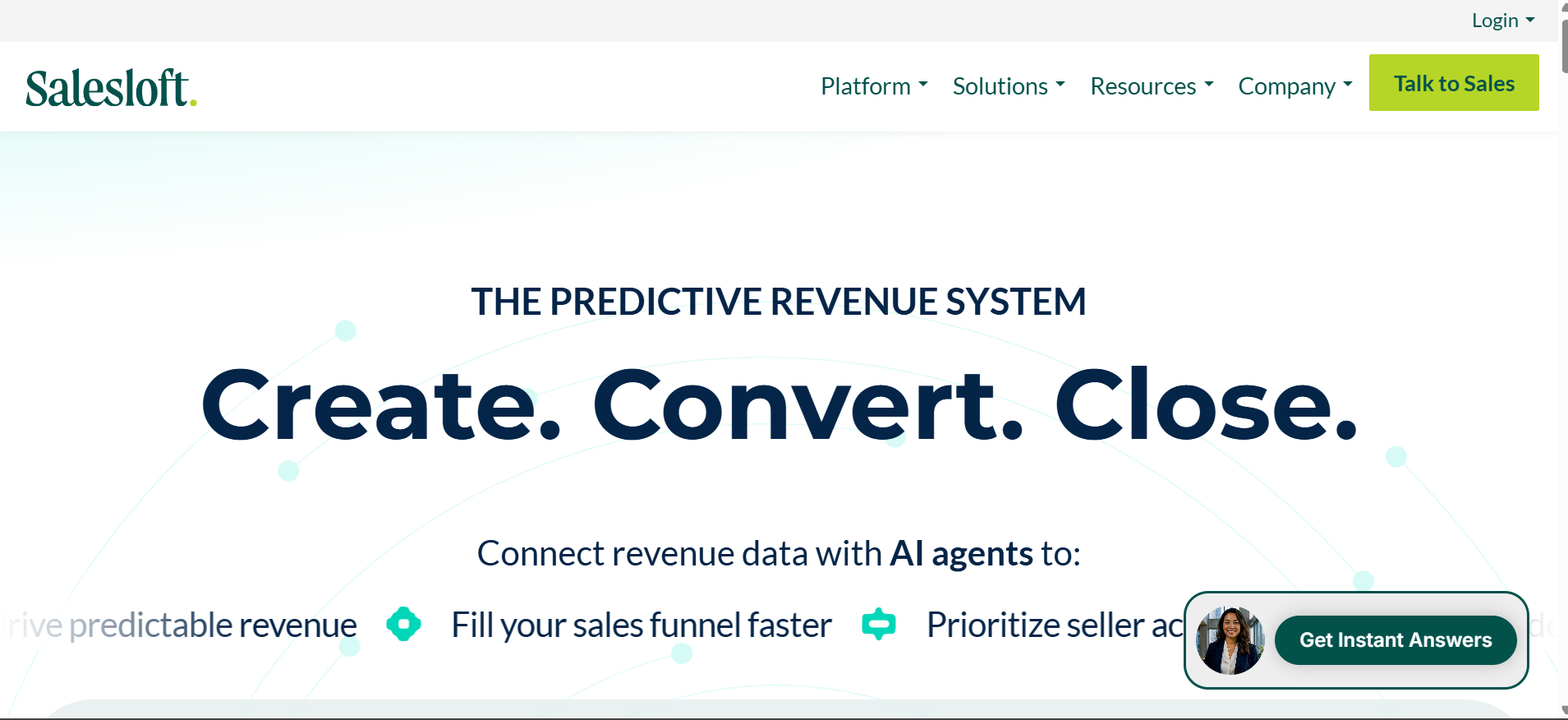
Instead of running static cadences, Rhythm surfaces prioritized actions based on real-time buyer signals. It tells reps what to do next and why, based on engagement data rather than sequence order. That's a meaningful upgrade from Outreach's sequence-first approach.
The conversation intelligence features are also strong. Call recording with AI-generated summaries, sentiment analysis, and coaching cards give sales managers actual coaching material instead of gut feel.
But here's the problem. The pain points mirror Outreach's almost exactly. Pricing is custom and opaque. Annual contracts come with auto-renewal enforced.
Recent G2 reviews describe rigid contract enforcement, poor support, and a product that feels increasingly legacy.
"Salesloft became a fossil... it does what it says but it's legacy now." — Walter C., Revenue Operations, Mid-Market (0/5 on G2)
If you're leaving Outreach because of pricing, complexity, or contract headaches, Salesloft gives you the same deal in a different wrapper.
Outreach built the sales engagement category.
In 2026, it evolved into something most teams didn't sign up for: an enterprise revenue platform with a price tag to match.
The right alternative depends on what you're actually trying to do.
If you want true multi-channel outreach with email and LinkedIn in one automated sequence, Salesforge is the pick. If you want to hand the entire outbound motion to an AI that works 24/7, Agent Frank is the closest thing to hiring an SDR without the headcount.
Pick the tool that matches the outbound motion you're actually running, not the one you aspire to run.
Hire Agent Frank, your AI SDR that works 24/7
For most cold outbound teams, Salesforge is the best Outreach alternative. It covers email and LinkedIn sequencing with unlimited senders, transparent pricing starting at $40/month, and connects to the broader Forge stack for data, warmup, and infrastructure.
For teams that want fully autonomous AI-powered outreach, Agent Frank handles prospecting and meeting booking without human intervention.
Outreach's AI agents (Research Agent, Revenue Agent, Personalization Agent) assist reps by surfacing data, drafting suggestions, and flagging risks. Agent Frank operates autonomously.
He prospects leads based on your ICP, writes personalized emails, sends sequences, handles replies, and books meetings 24/7 without human input in Auto-Pilot mode. Outreach's AI makes reps faster. Agent Frank replaces the SDR work entirely.
For lean teams that need prospecting data and sequencing in one tool, Apollo is better value than Outreach.
Apollo includes a 210M+ contact database, which is something Outreach doesn't offer at all. Pricing starts at $49/seat/month with a free tier available. Outreach starts at $100+/user/month with no free option. The trade-off is that Apollo's sequencing is lighter than Outreach's for complex enterprise workflows.
Smartlead starts at $32/month. Salesforge starts at $40/month. Instantly starts at $47/month. All three offer flat-fee or low per-user pricing, which is dramatically cheaper than Outreach's $100 to $165/user/month.
Apollo has a free tier with limited features, making it the only Outreach alternative you can test at zero cost.
No. Outreach requires a demo and an annual contract commitment before you can use the platform. There is no free plan and no standard free trial.
Most alternatives on this list offer either a free tier like Apollo, a free trial like Salesforge with no credit card required, or month-to-month billing like Instantly and Smartlead.
For small teams of 1 to 10 reps, Salesforge or Apollo are the strongest options. Salesforge's Growth plan covers unlimited users at $80/month flat with no per-seat scaling. Apollo's Basic plan at $49/seat/month bundles data and sequencing in one tool.
Both offer transparent pricing and fast onboarding. Avoid Outreach and Salesloft for small teams because both are priced and designed for 50+ rep organizations.
No. Outreach supports LinkedIn as a manual task step within sequences. It reminds reps to visit profiles or send connection requests, but it doesn't automate any LinkedIn actions. Salesforge is the only alternative on this list with native LinkedIn automation built into multi-channel sequences, with unlimited LinkedIn senders on the Growth plan.
Both are enterprise sales engagement platforms with similar feature sets including cadences, a dialer, deal management, forecasting, and conversation intelligence. Both use similar pricing models with custom, quote-only pricing and annual contracts.
The main differentiator is Salesloft's Rhythm engine, which prioritizes rep actions based on buyer signals rather than static sequence order. For most teams, switching from Outreach to Salesloft changes the vendor but not the cost structure or approach.